Saigon Temples
We ventured out into Ho Chi Minh City to visit various Buddhist temples around town.
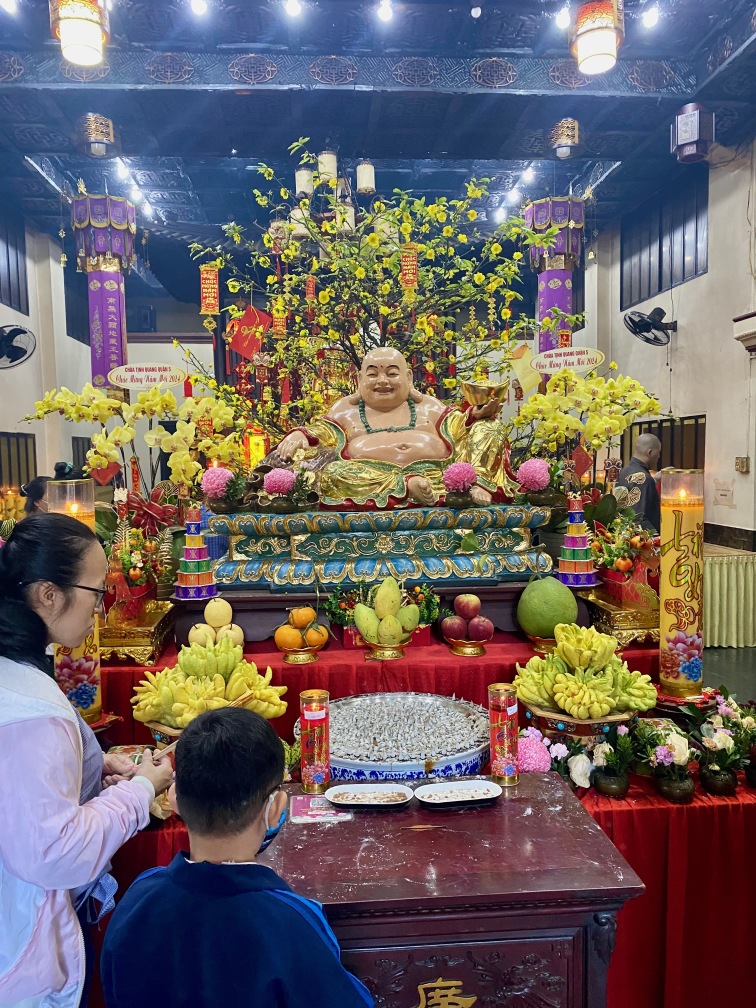
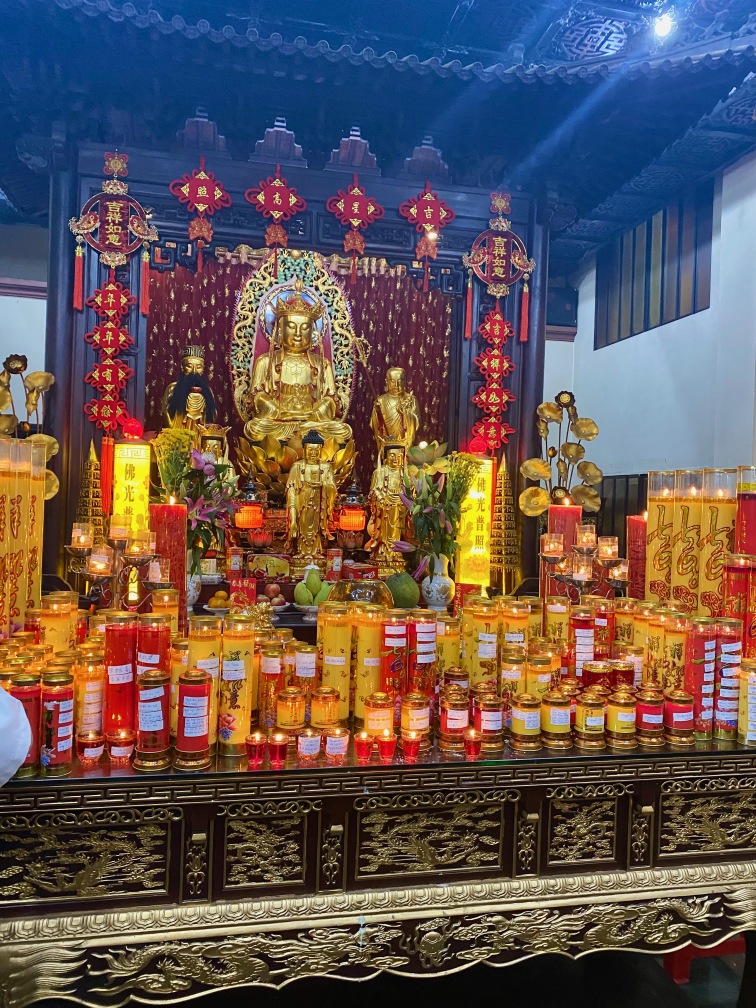
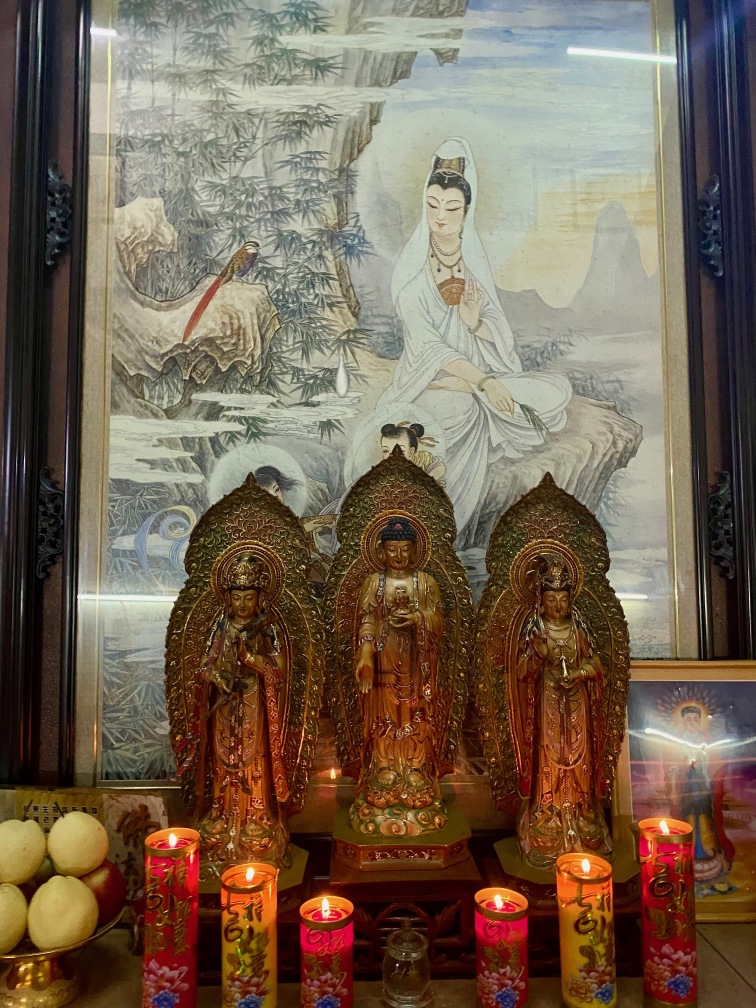
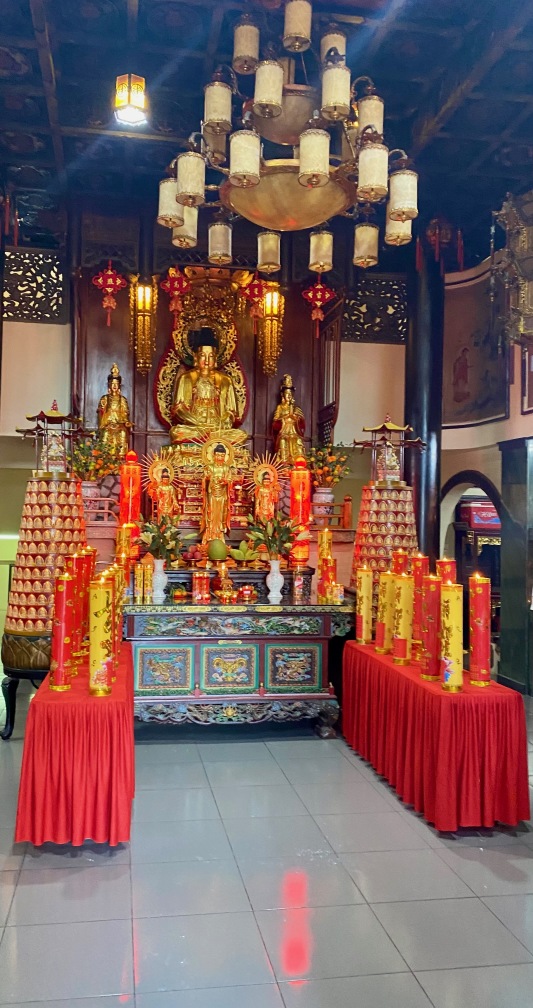
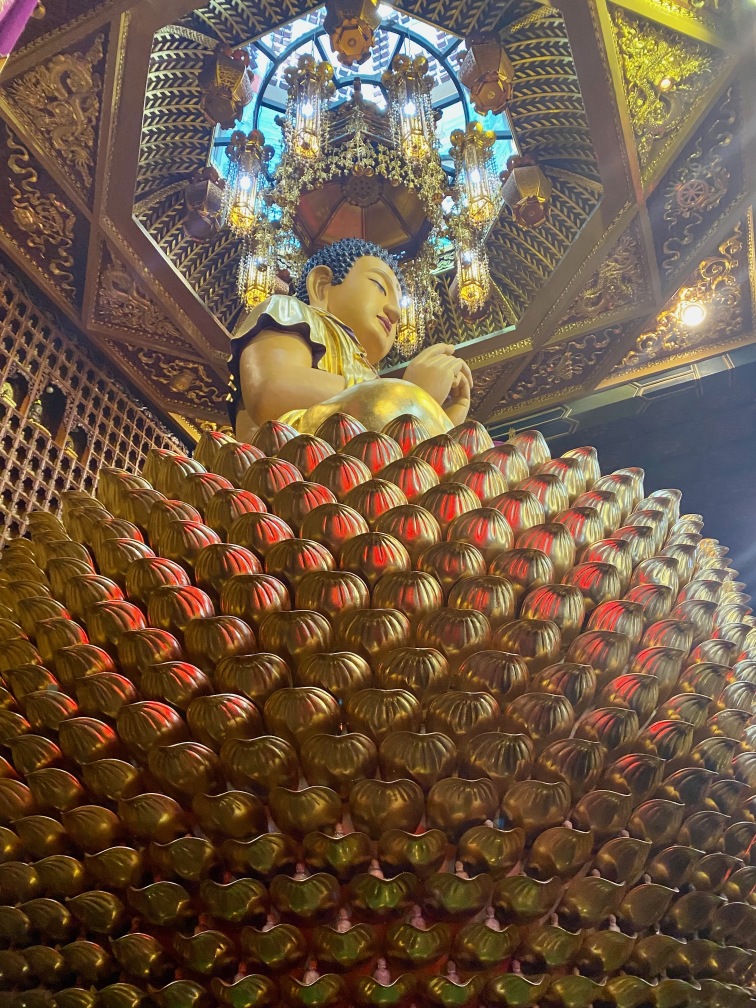
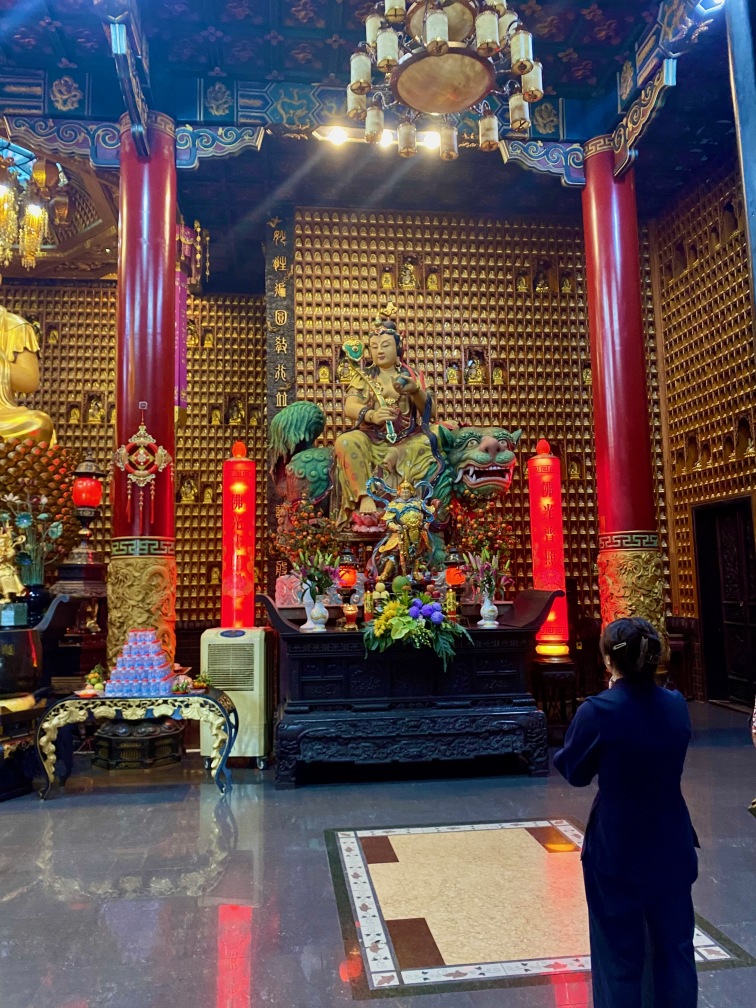
These had quite a different quality than Balinese temples. The Vietnamese temples were primarily indoors, rather than outdoors, and centered around giant statues of Buddhas, whereas in a Balinese temple there was no visual representation of the deity.
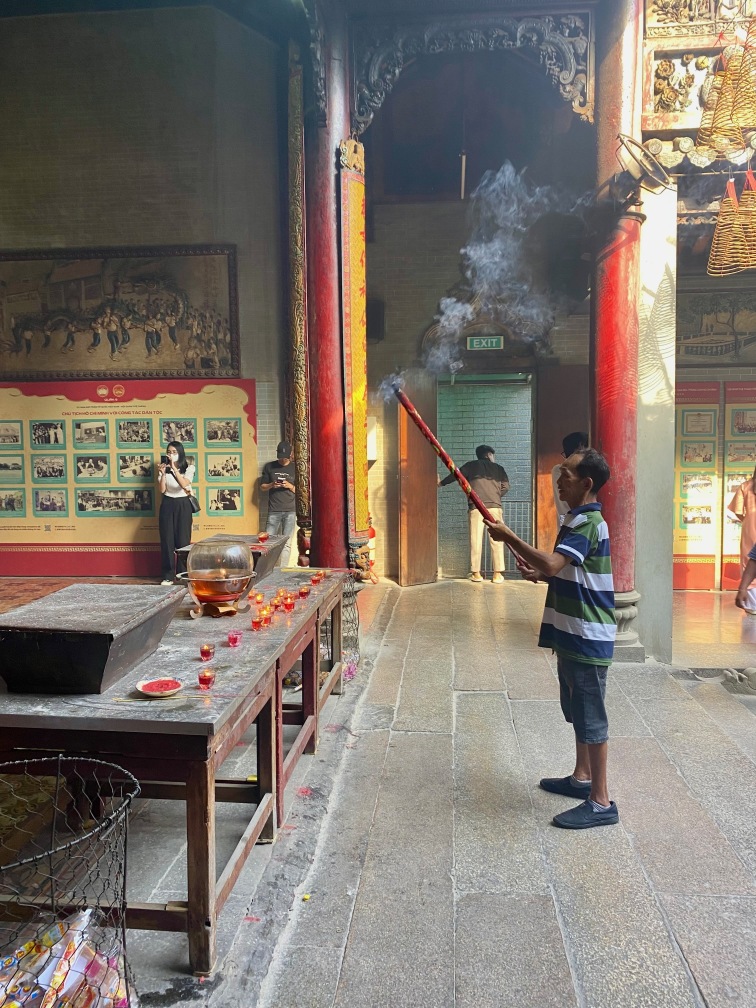
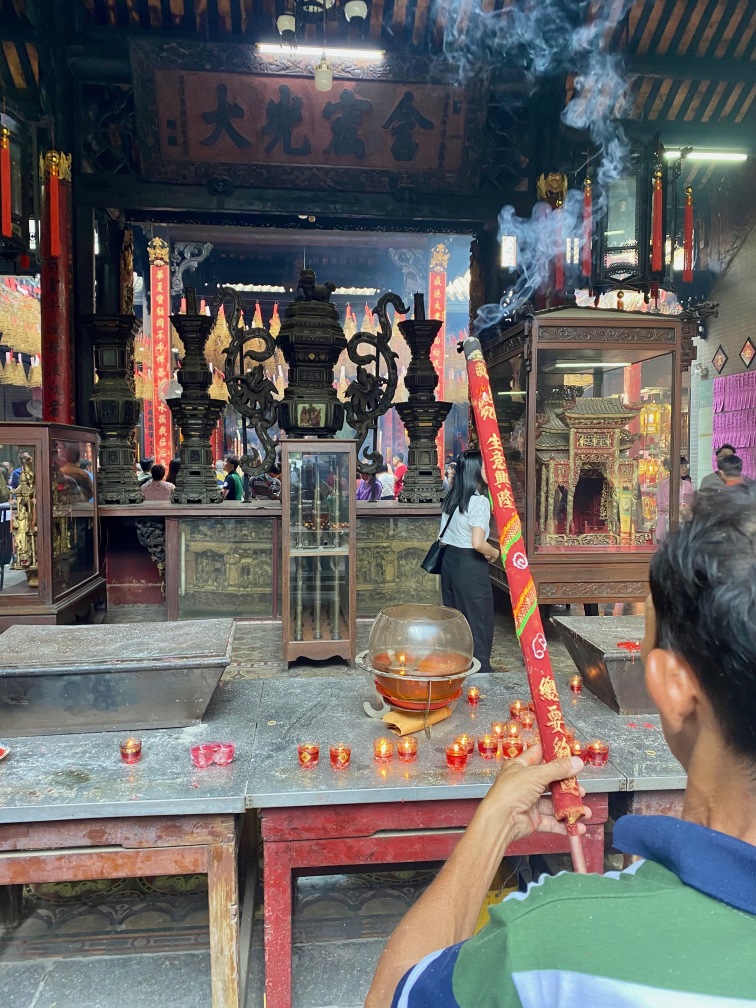
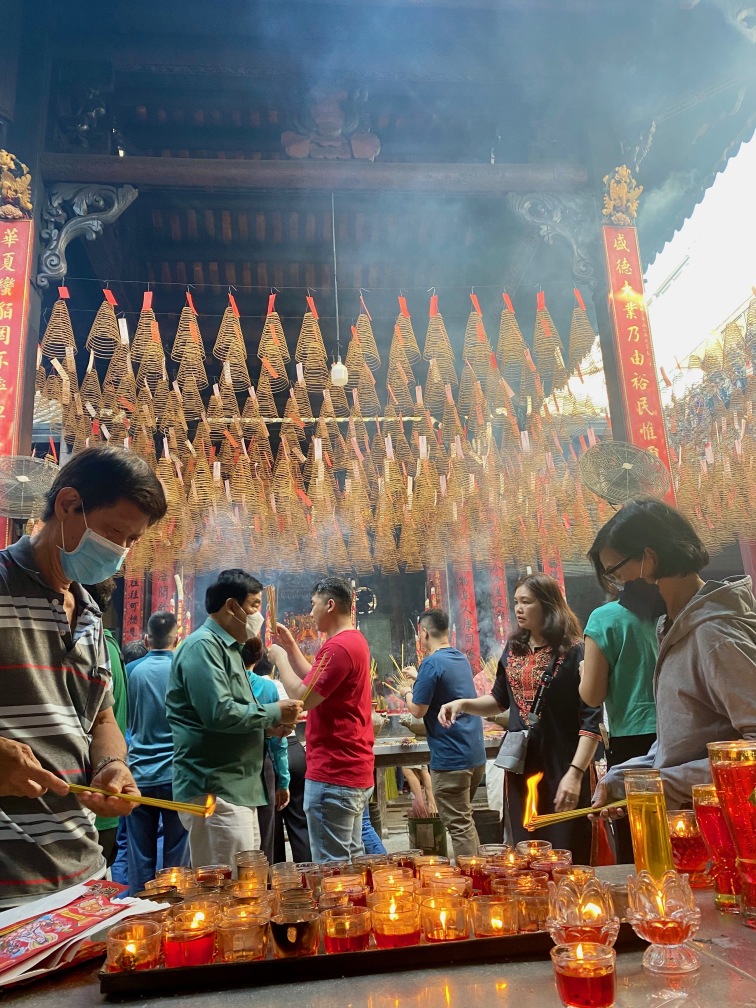
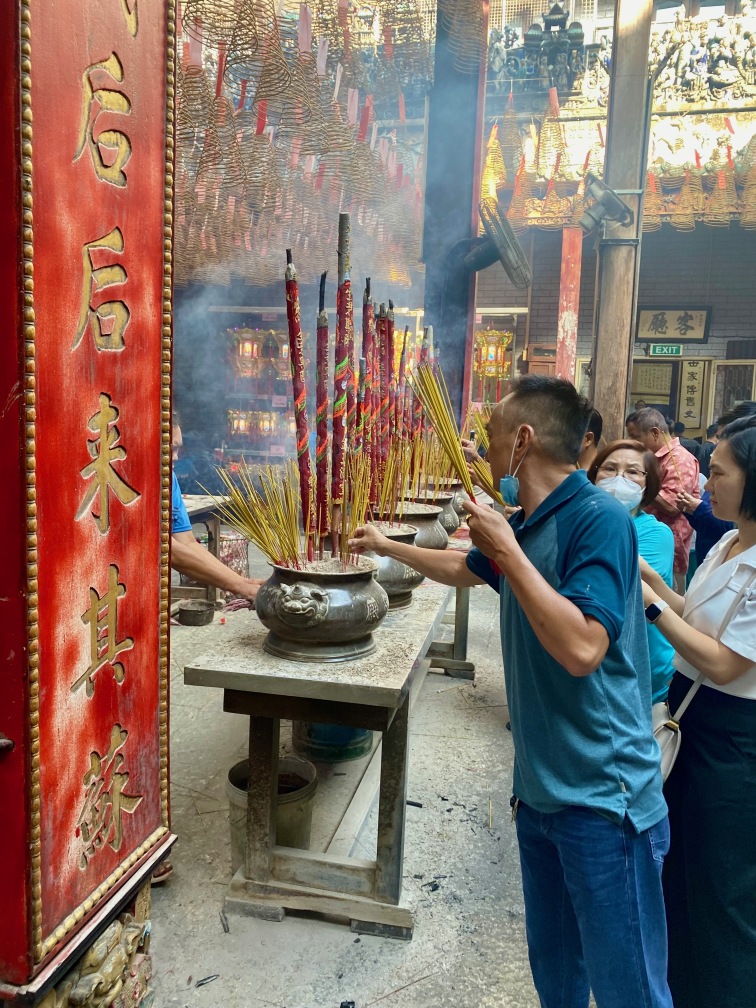
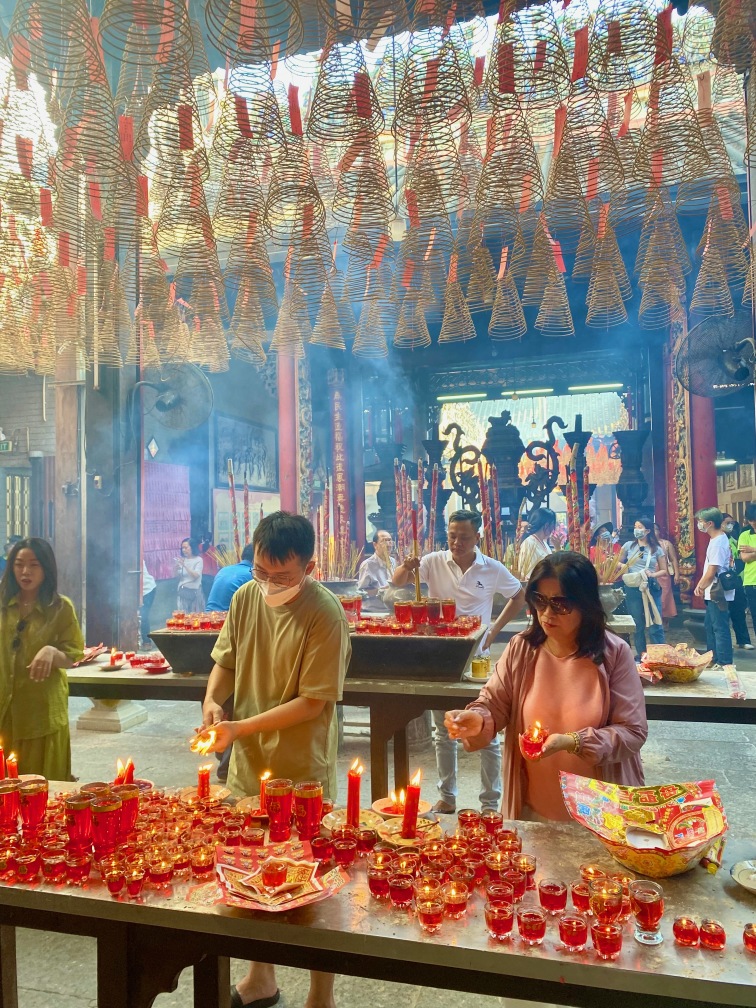
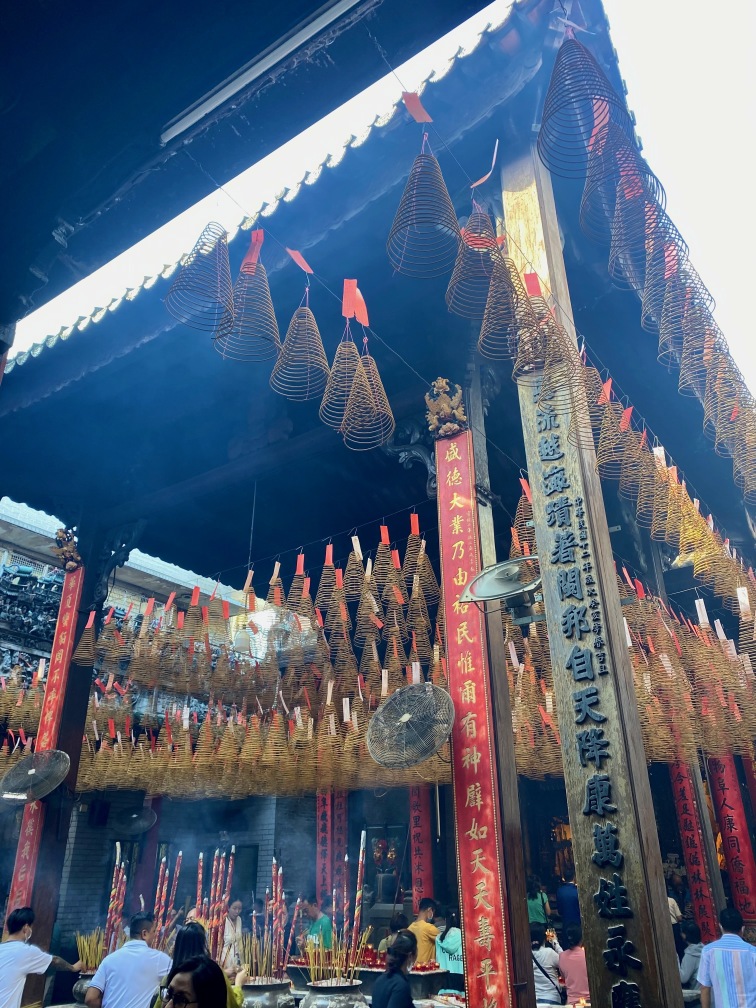
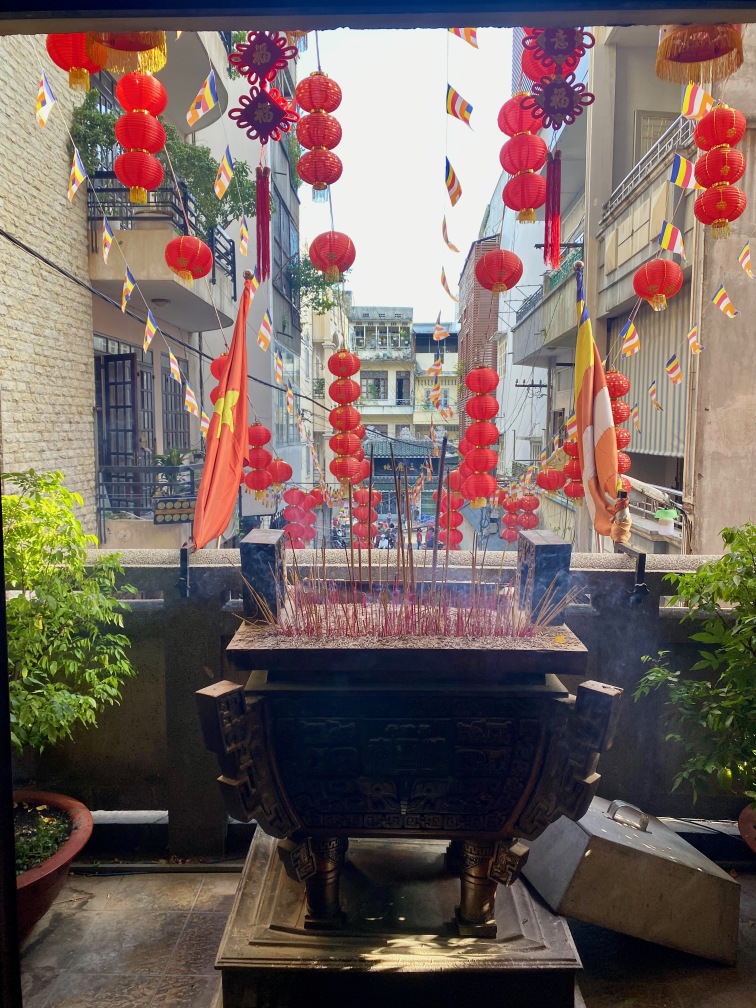
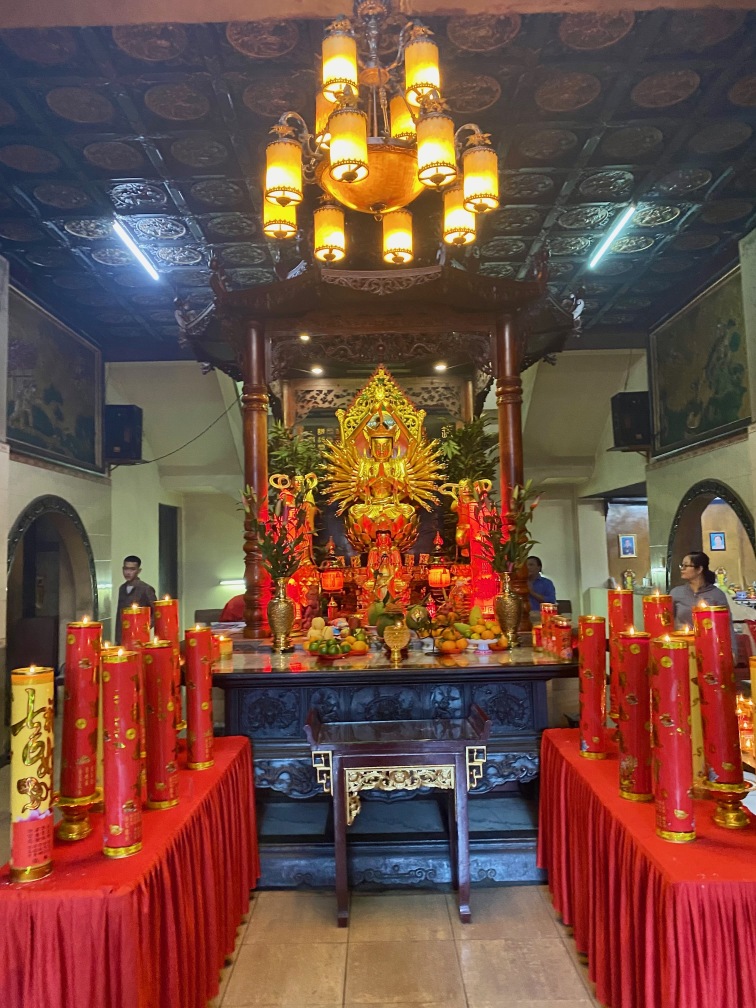
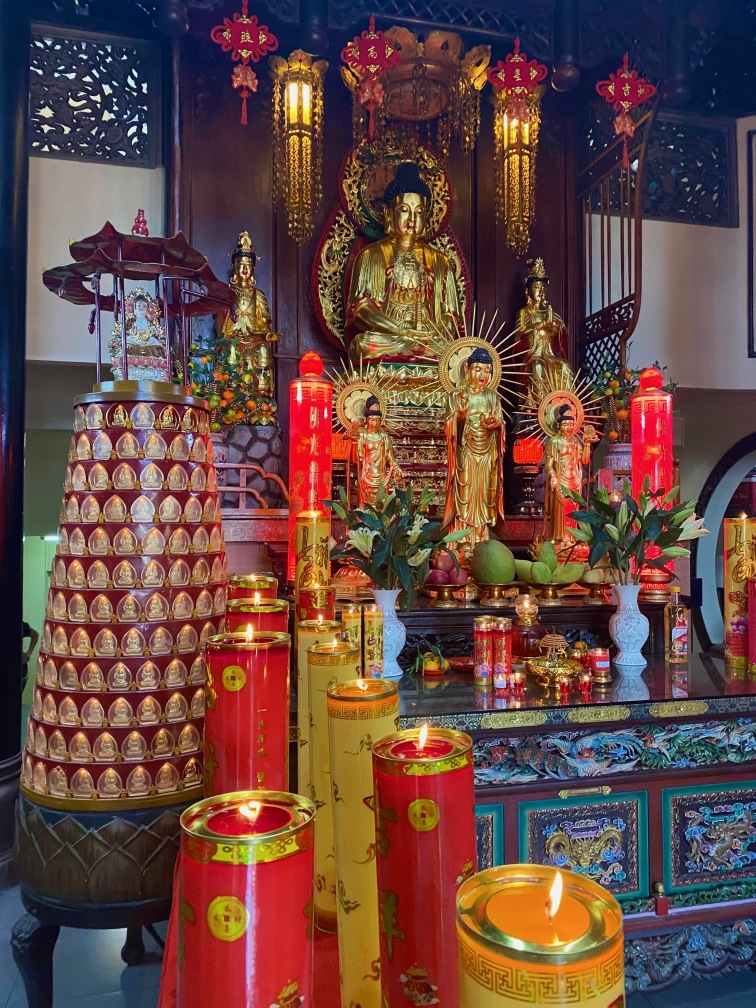
In each temple there were multiple shrines surrounded by offerings brought by worshippers, and a thick haze of incense smoke in the air.
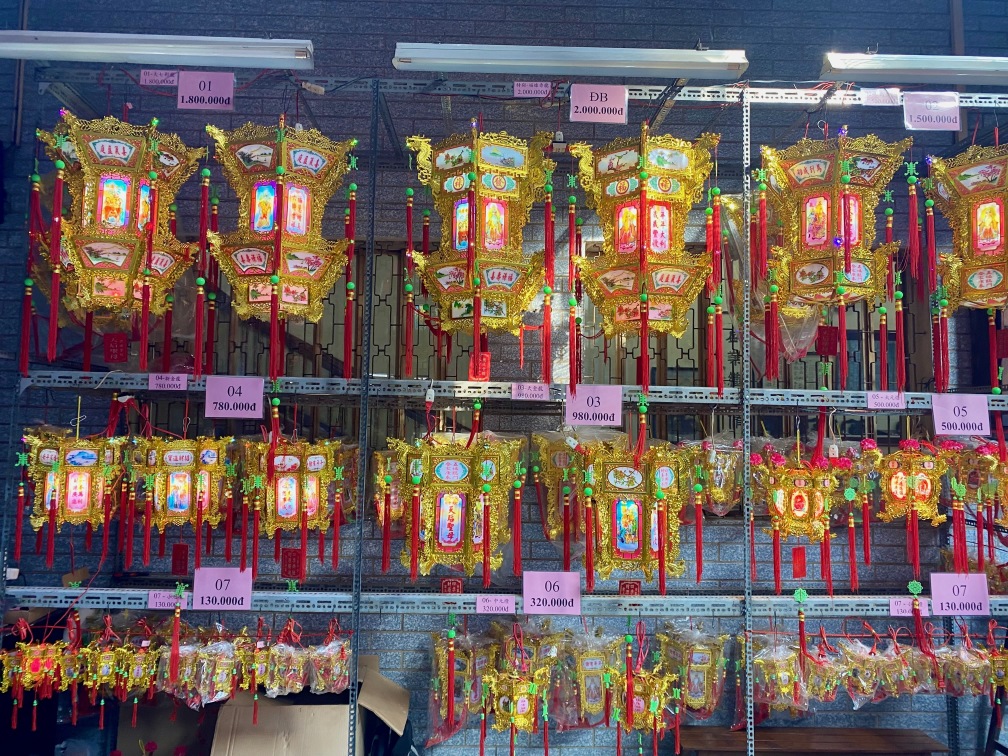
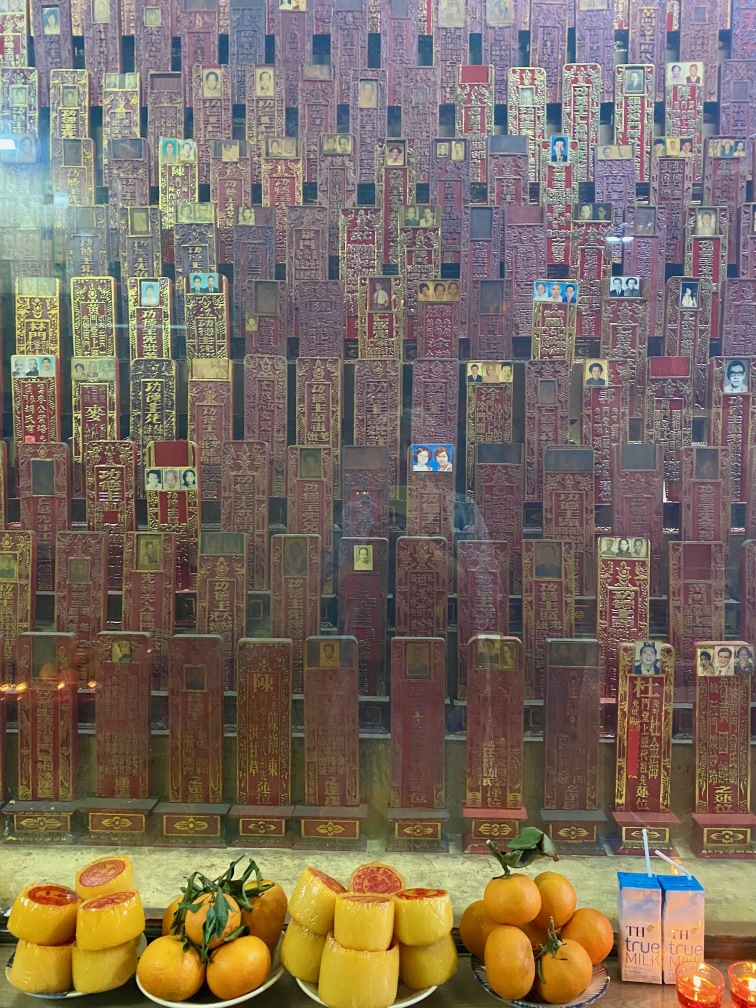
The temple typically had a booth to purchase incense, candles, and other tributes, and an area where significant patrons of the temple are remembered.
Thien Hau Temple
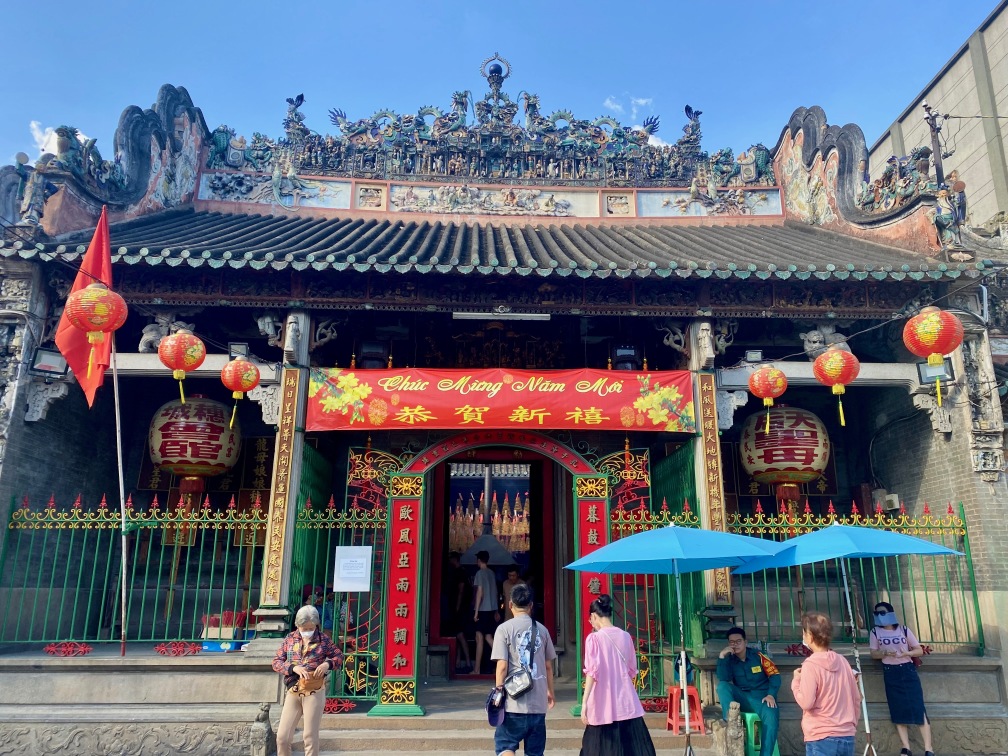
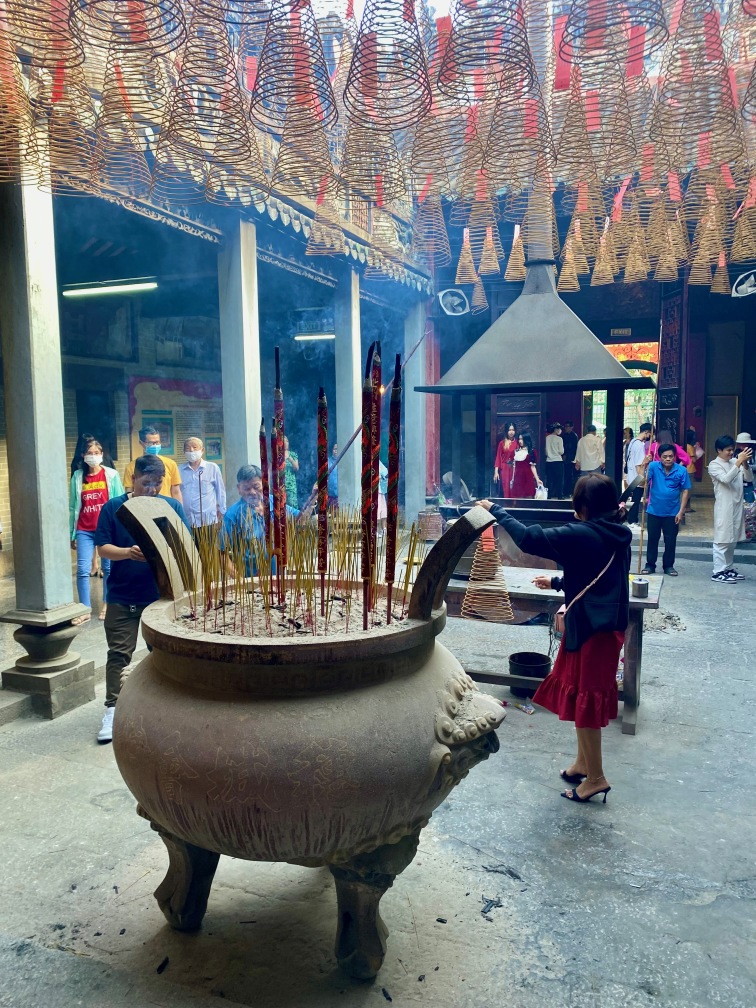
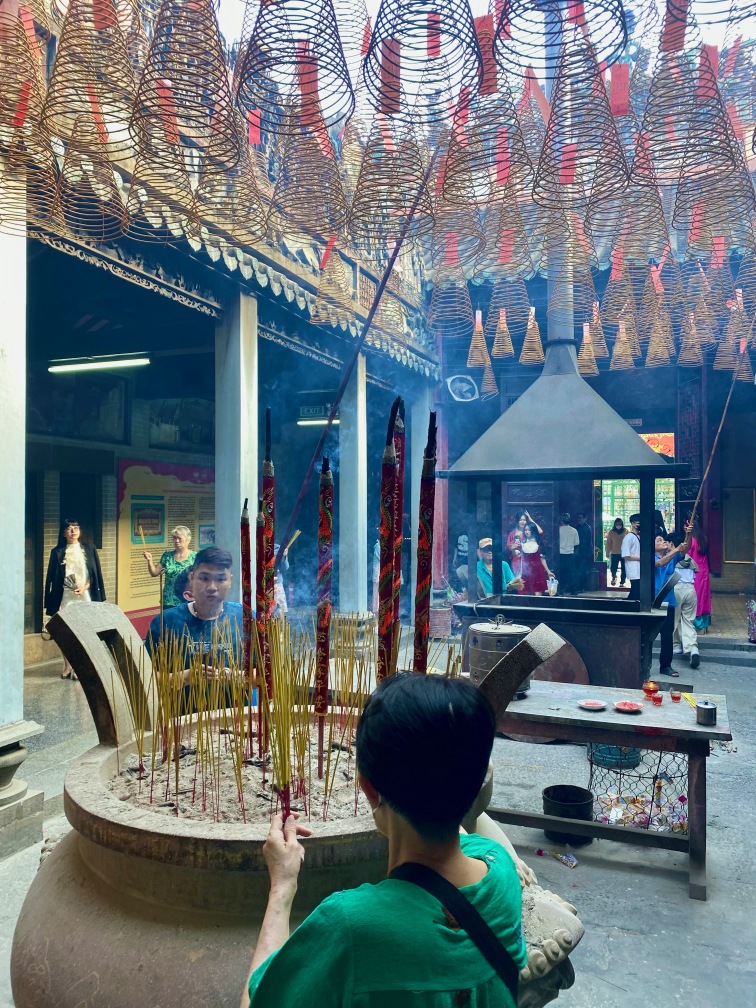
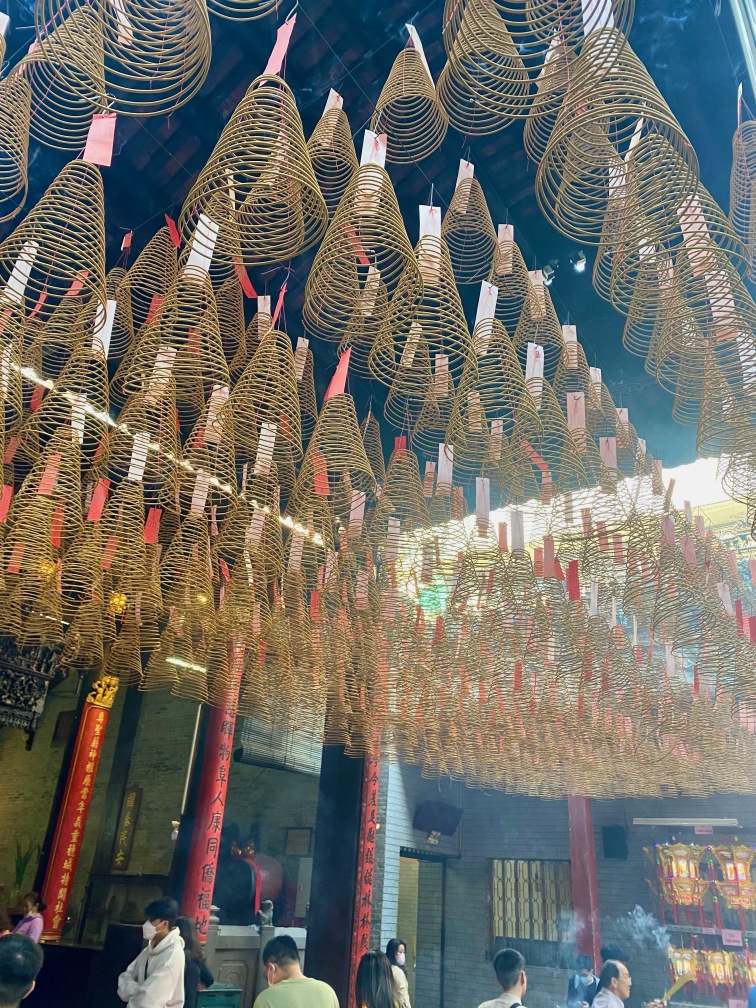
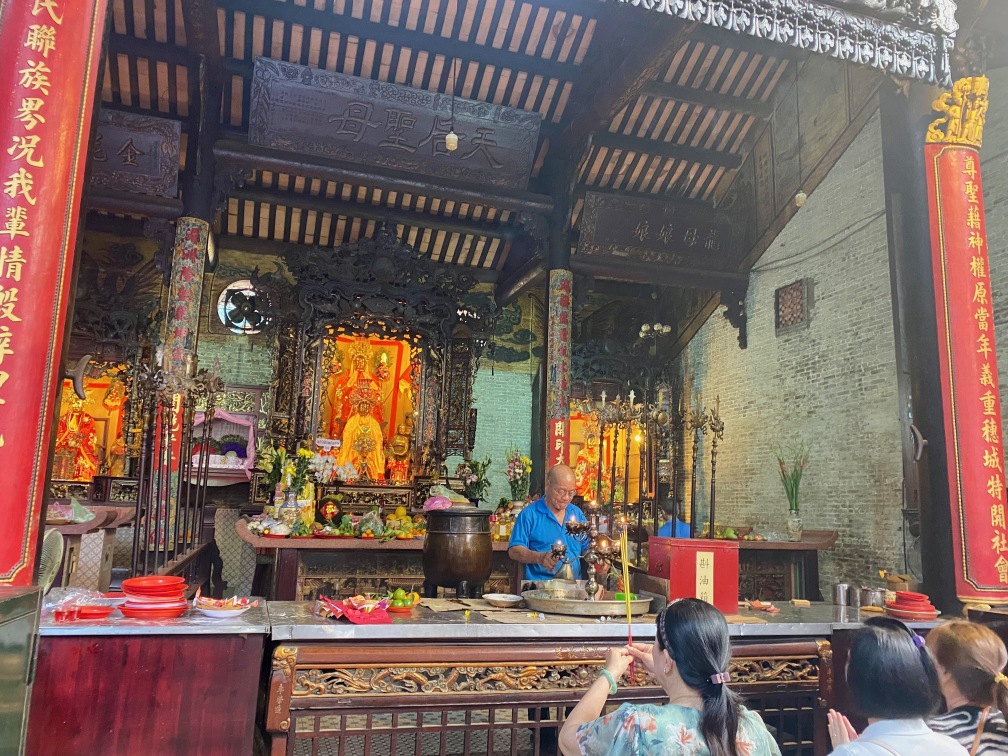
Thien Hau Temple is a Chinese-style temple of the Chinese Goddess of Sea, Mazu, located in District 5 (Chinatown) of Ho Chi Minh City.
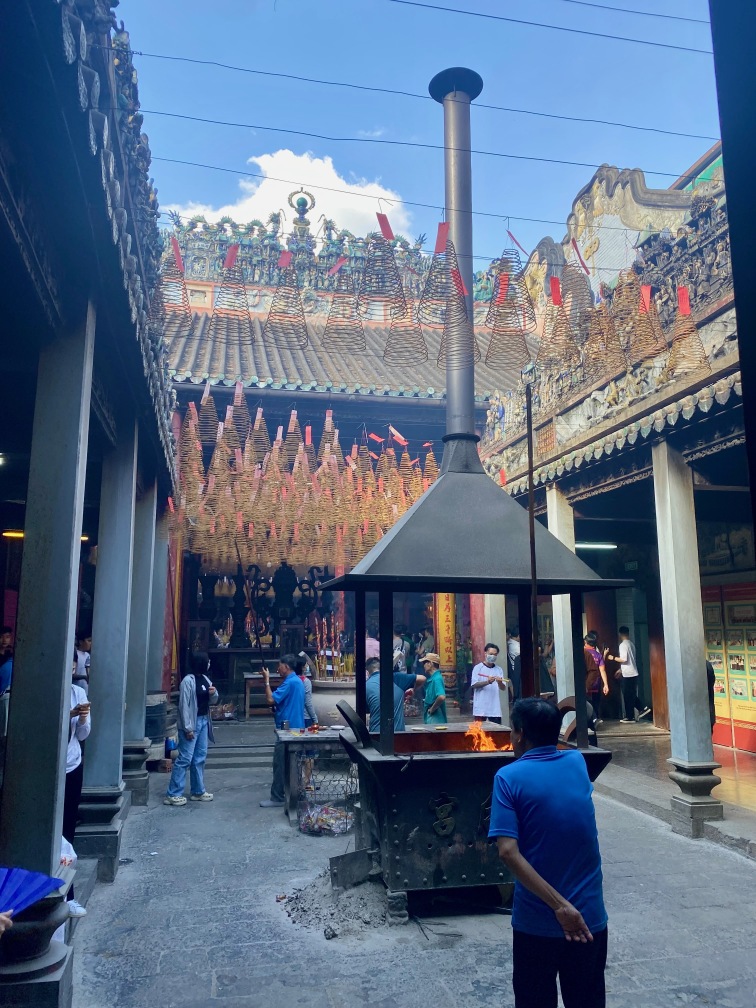
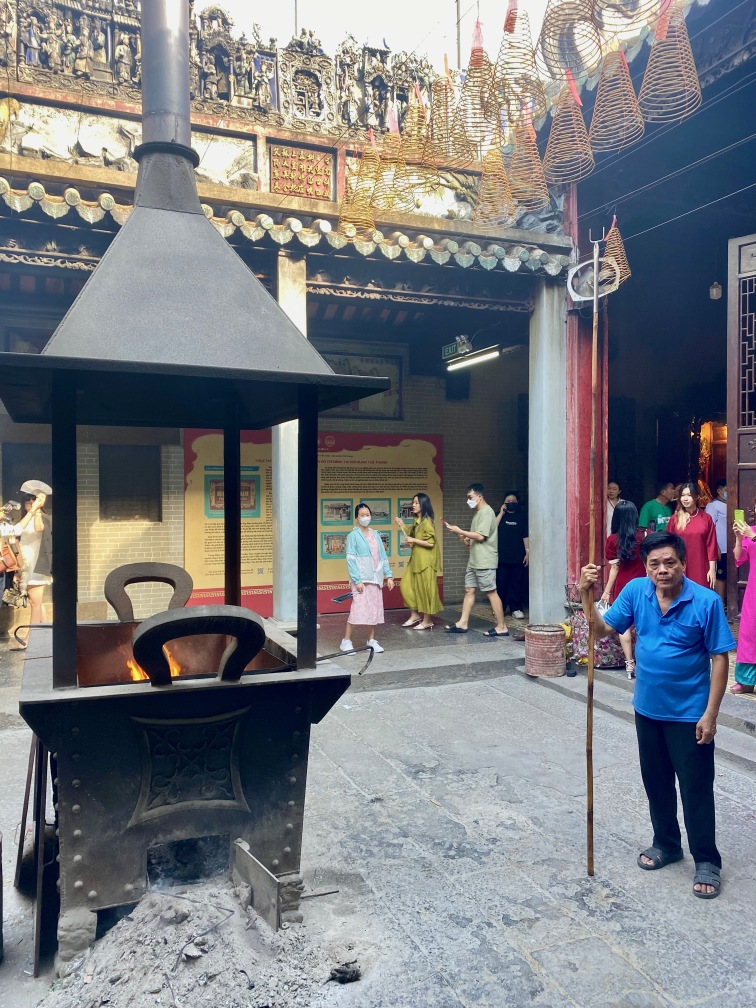
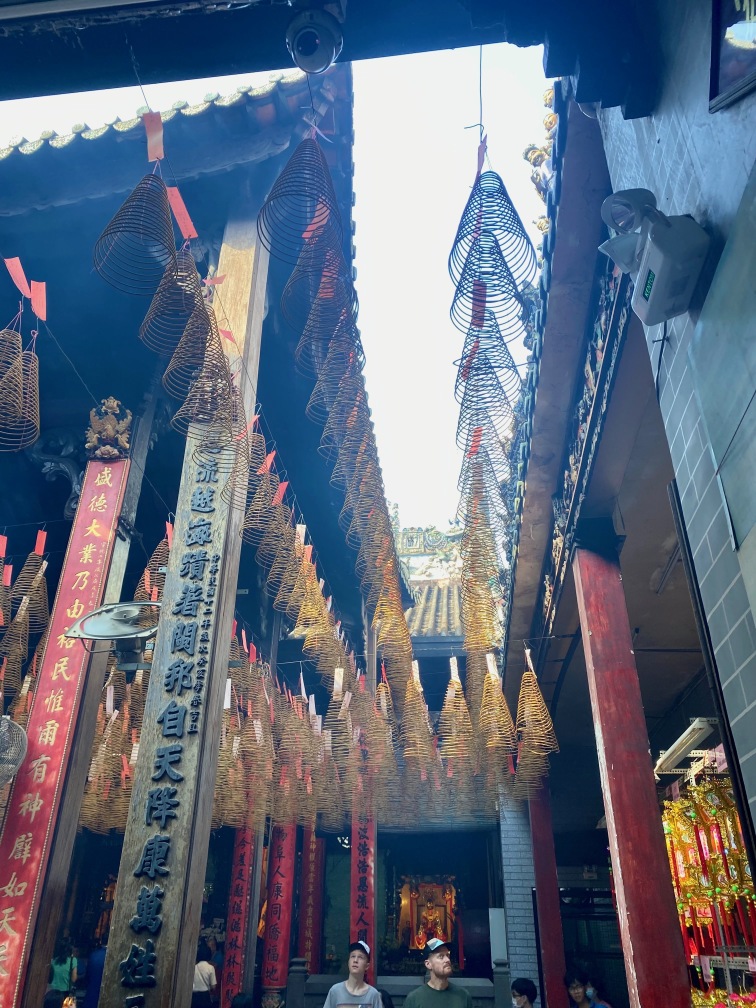
Dozens of spiral incense sticks hung from the ceiling, and hot ash would occasionally fall on our clothes from above.
A hot open fire burned in the middle of the courtyard, which added to already sweltering heat of the sun
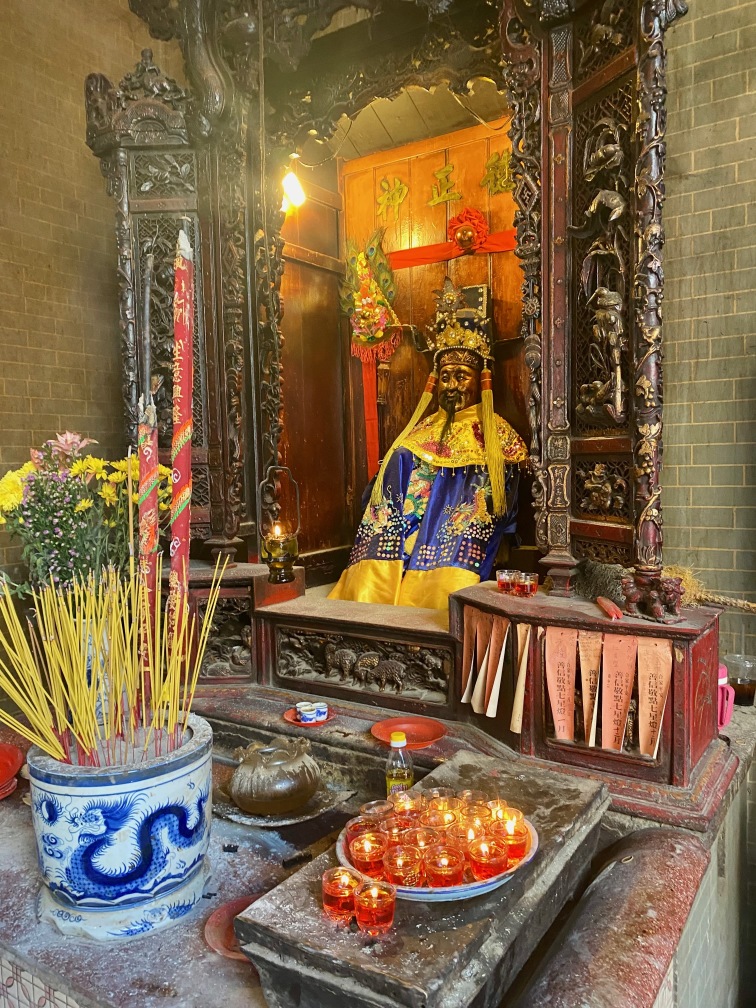
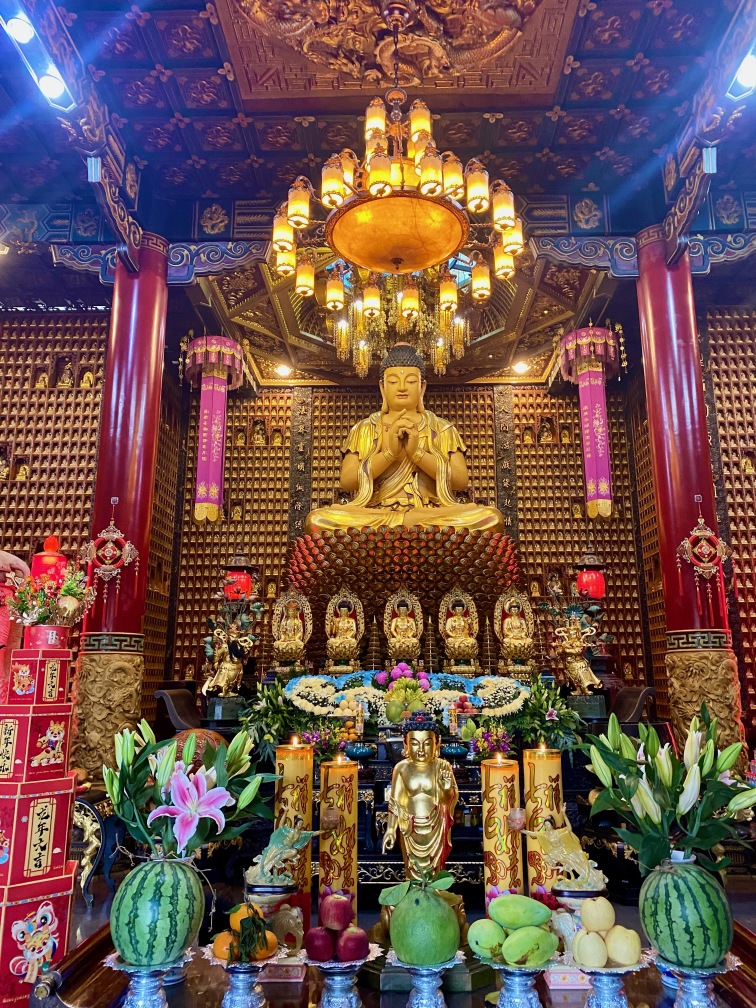
Offerings of fruit adorned the main shrine.
Van Phat Pagoda
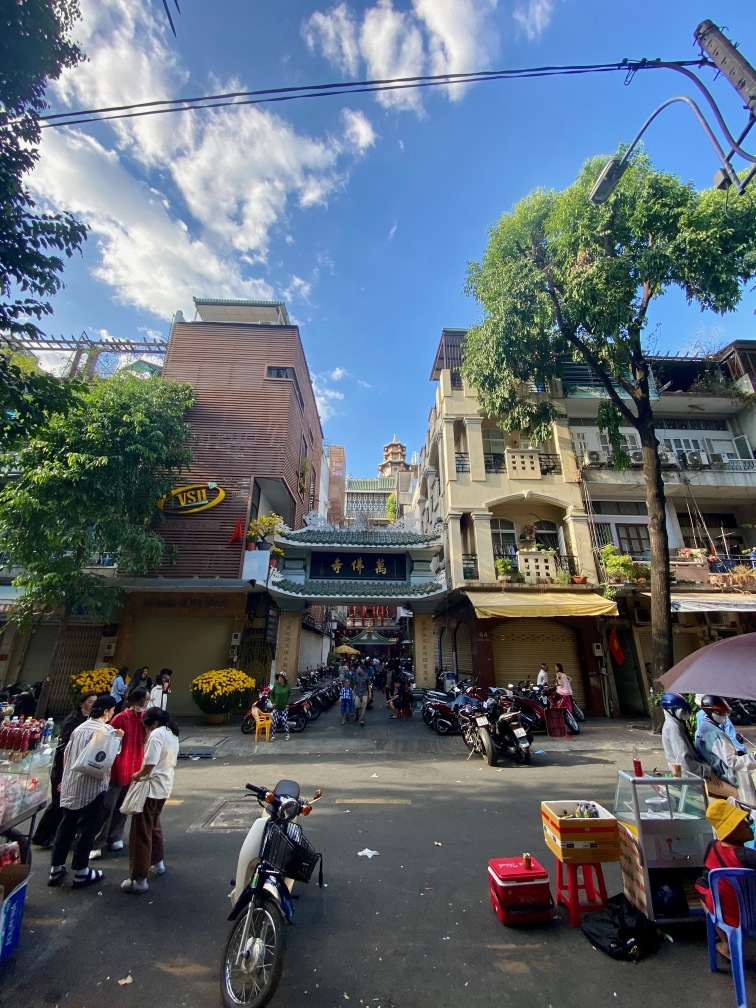
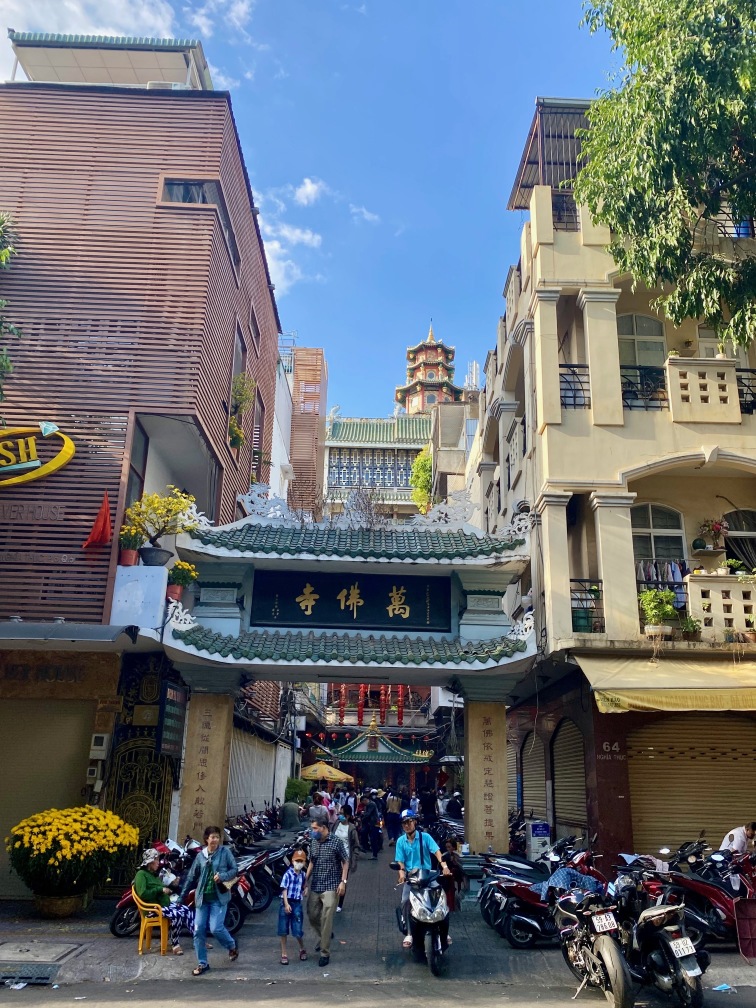
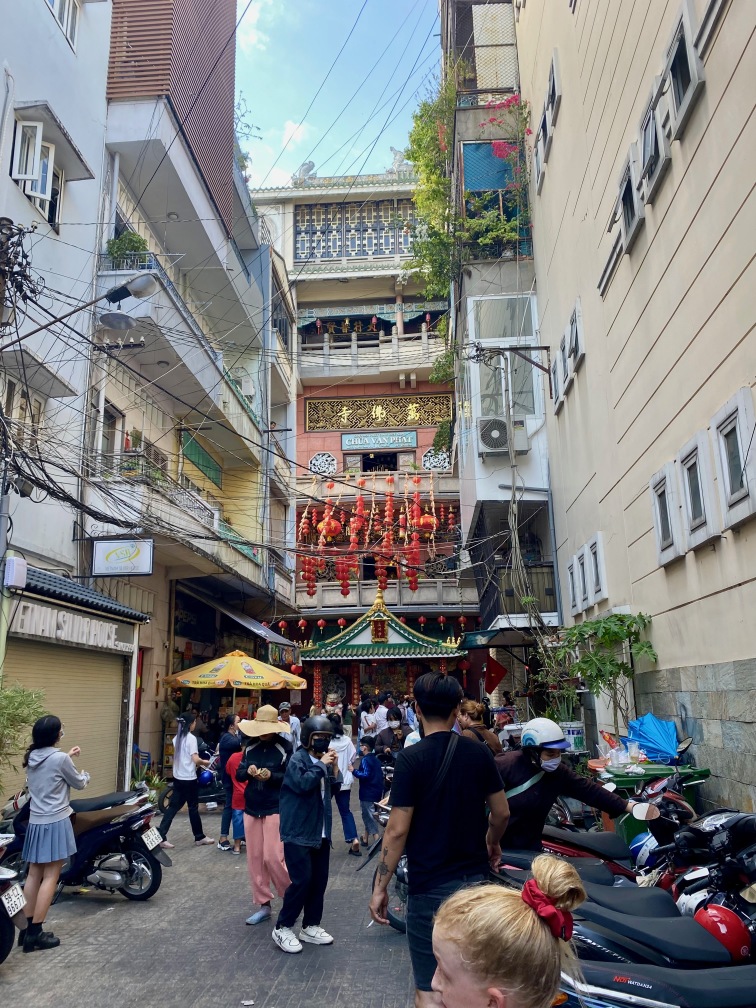
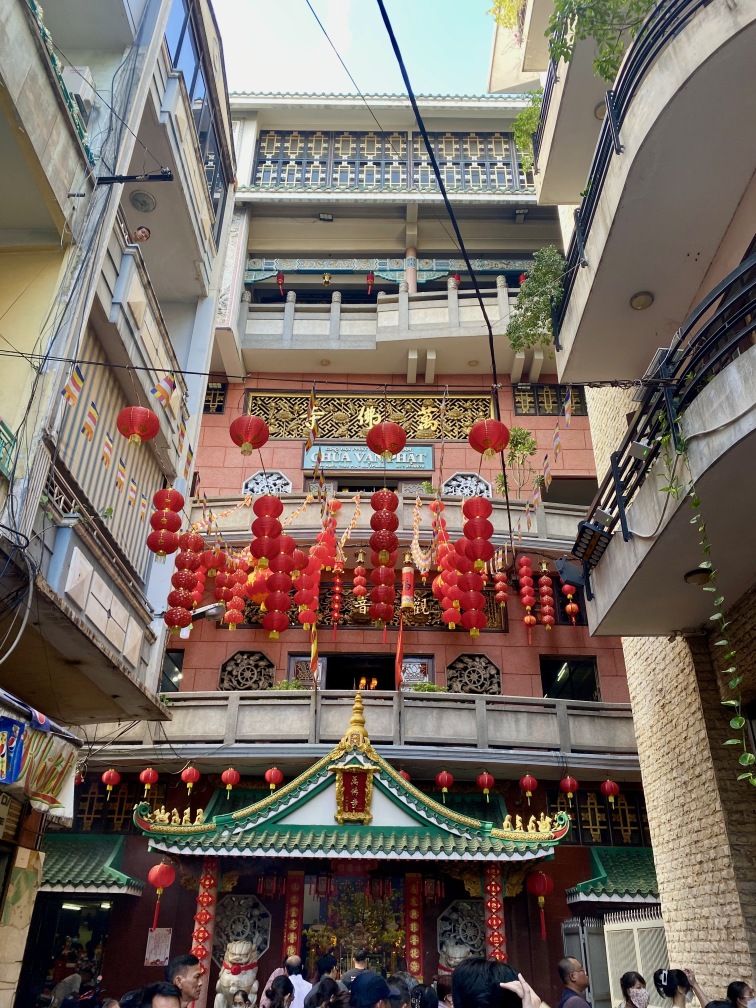
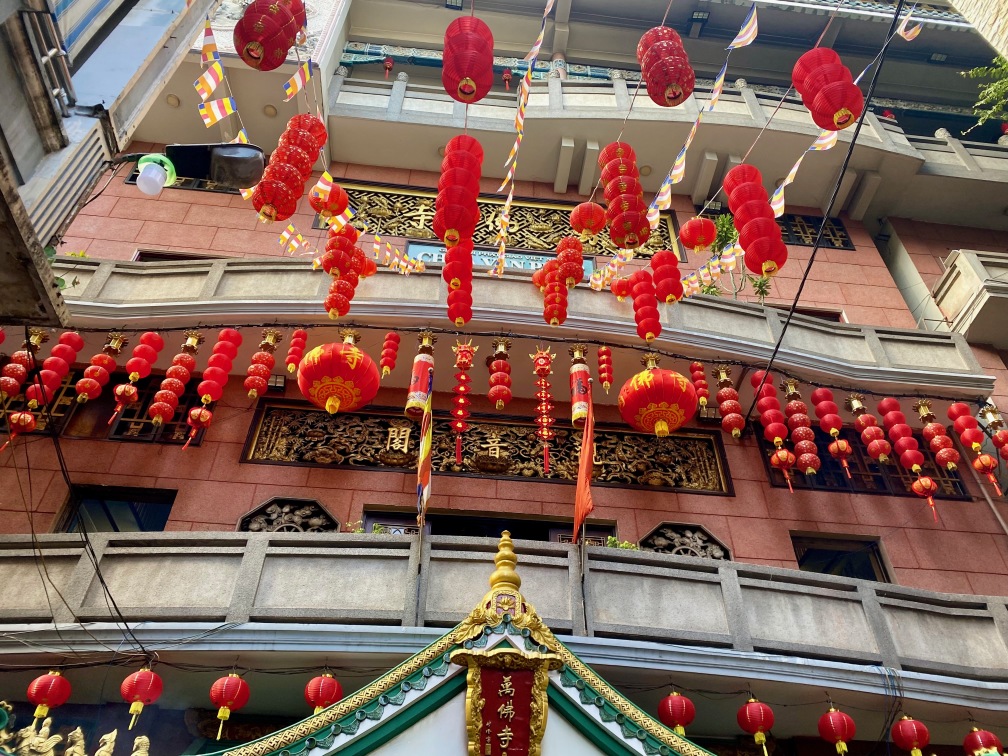
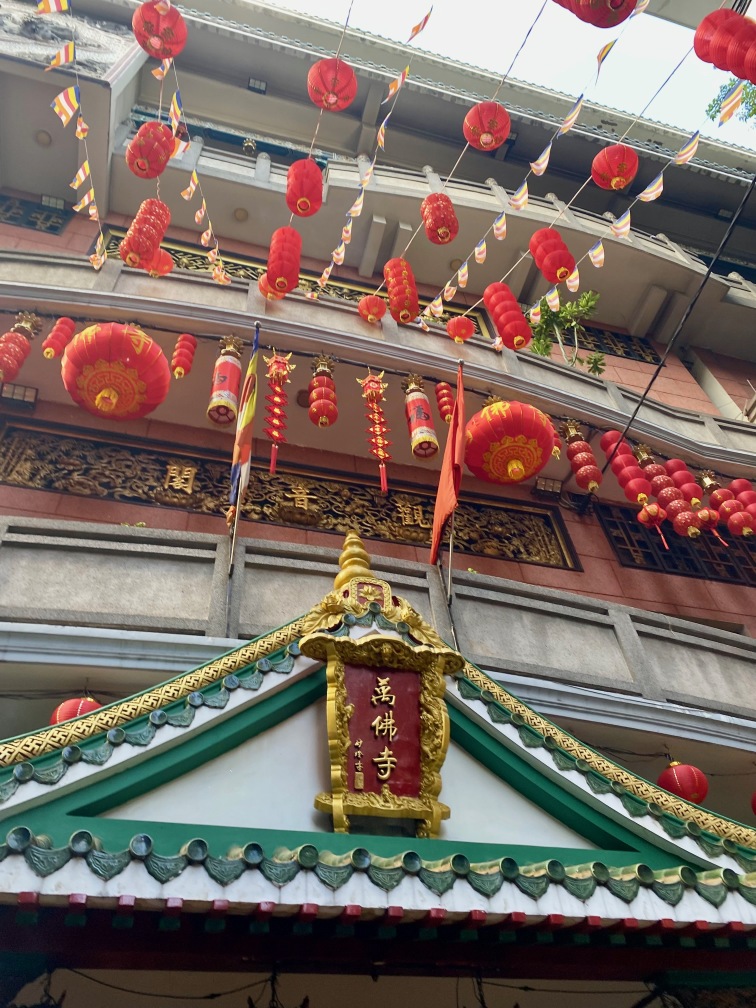
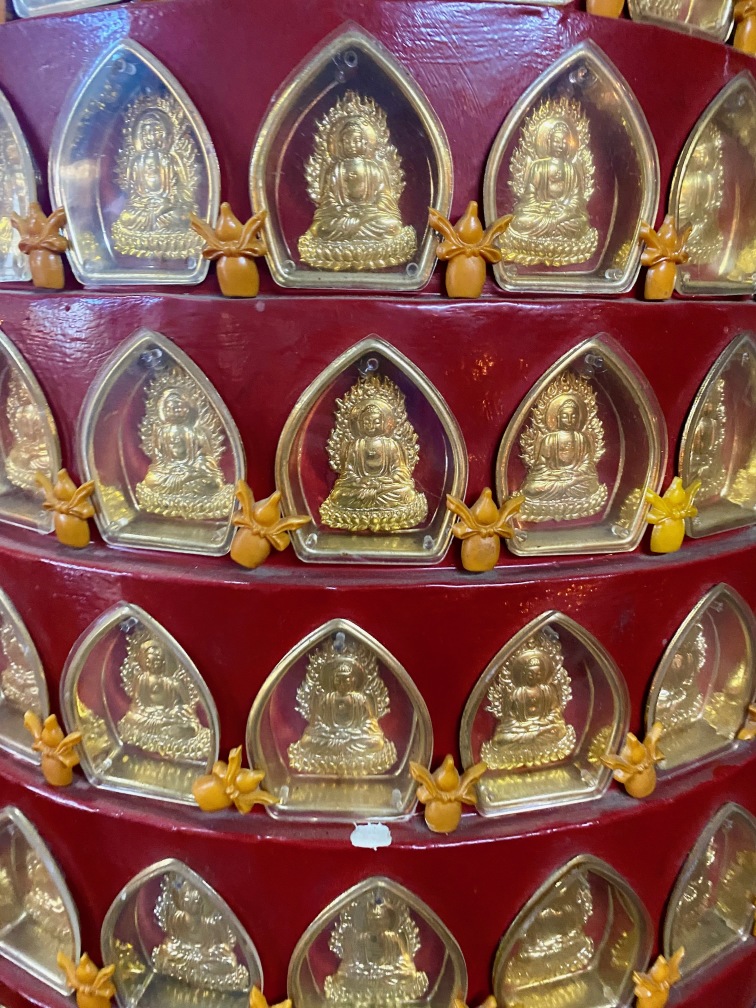
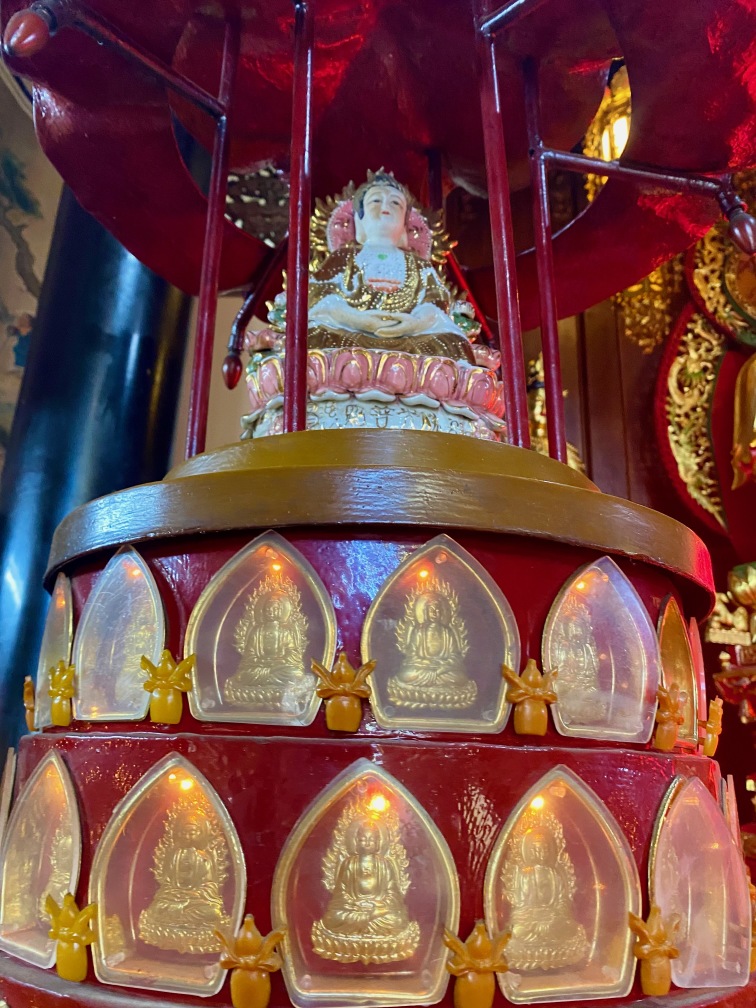
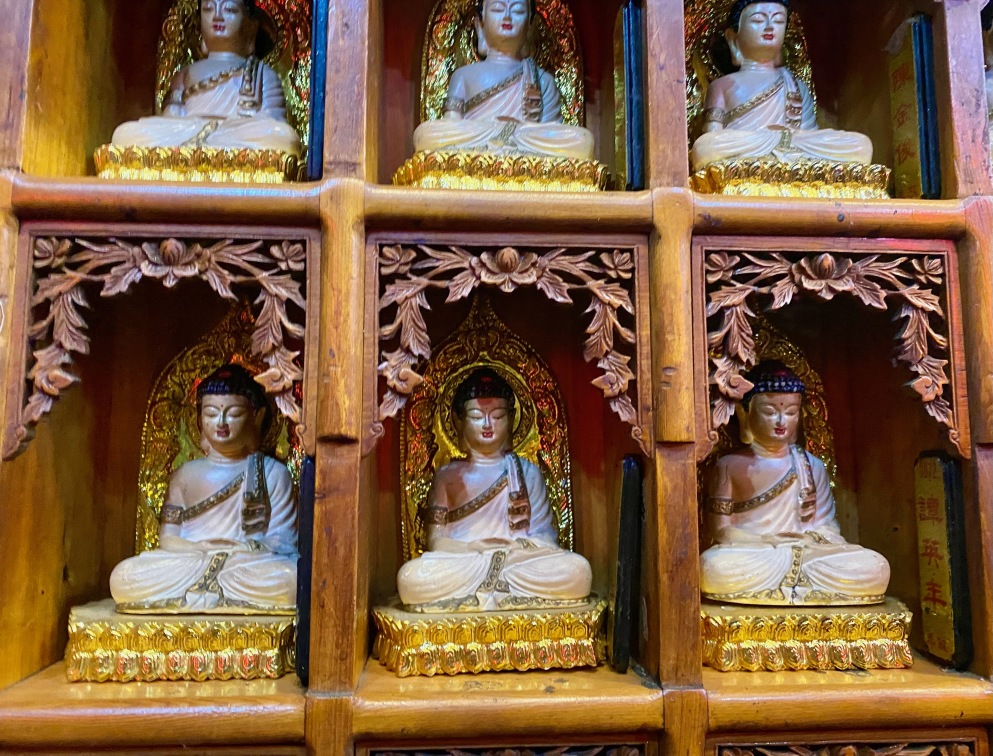
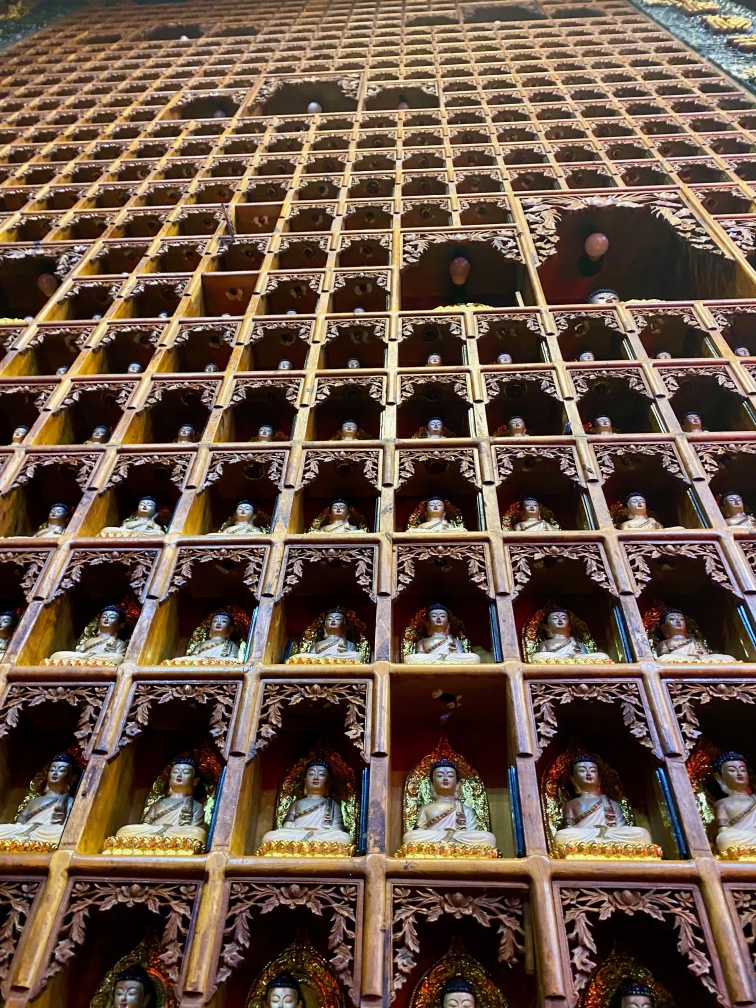
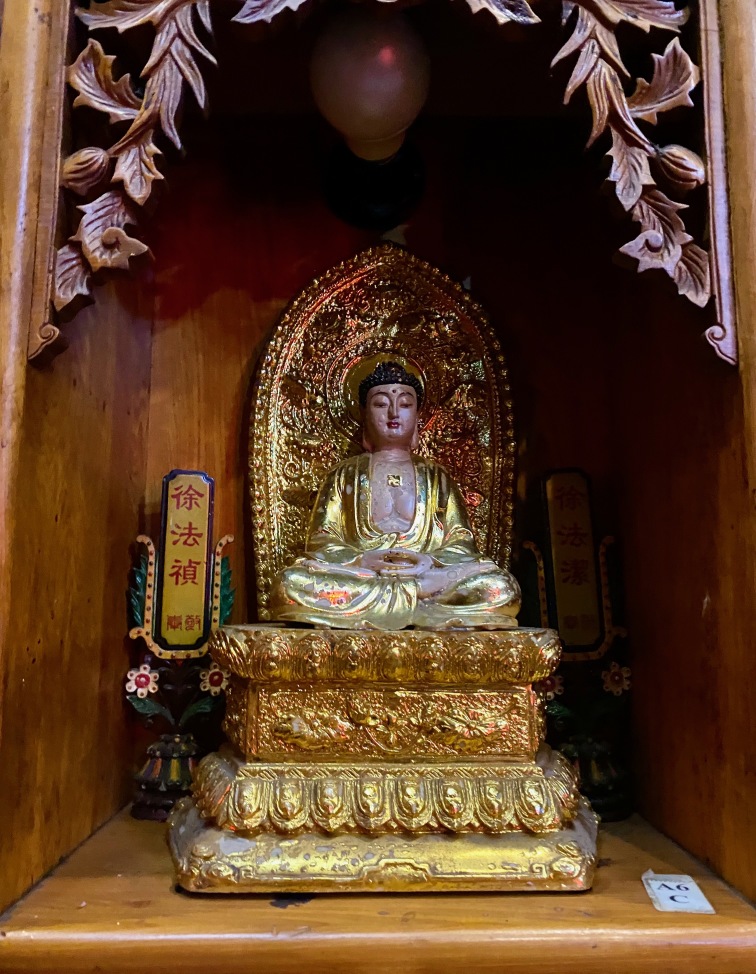
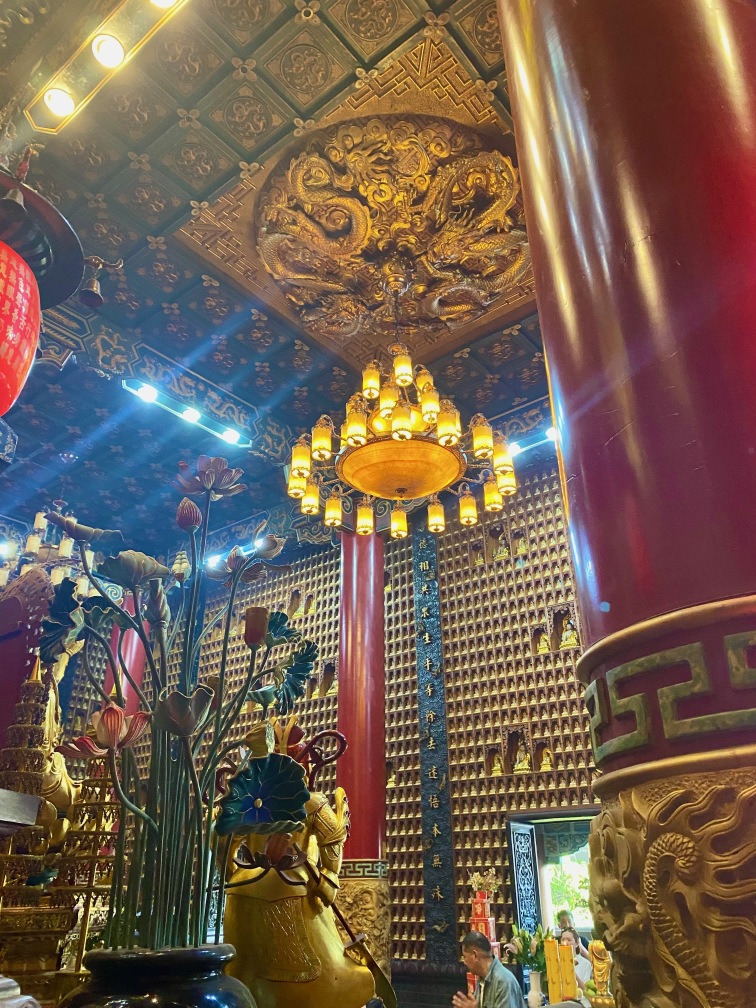
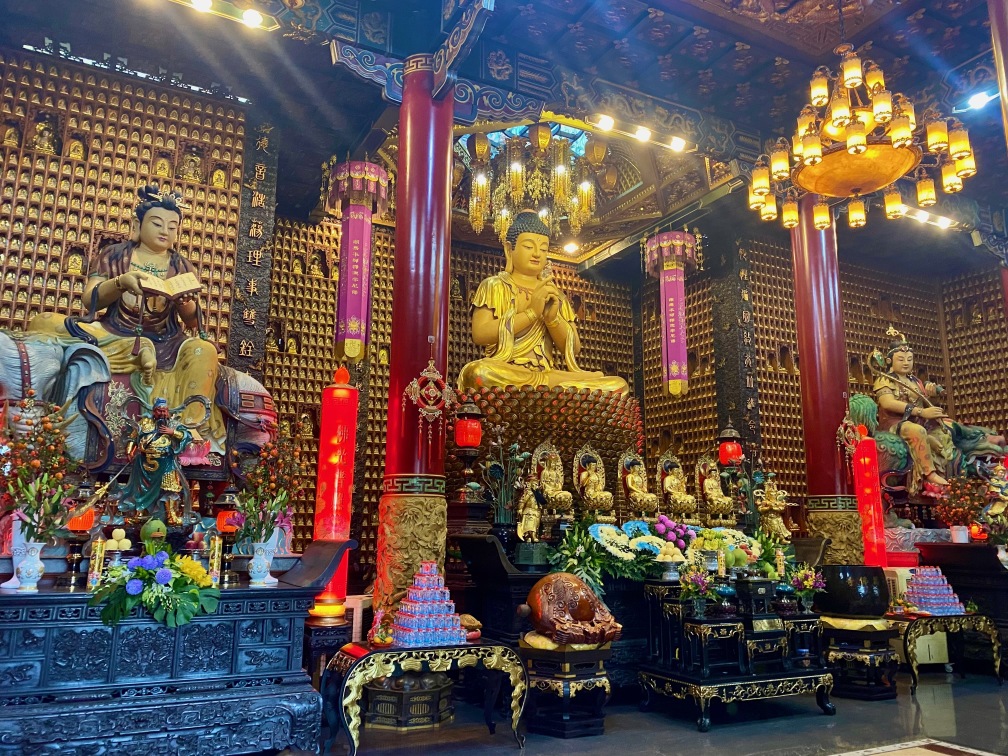
At the end of an unassuming alley in District 5 of Ho Chi Minh City is the Temple of Ten Thousand Buddhas.
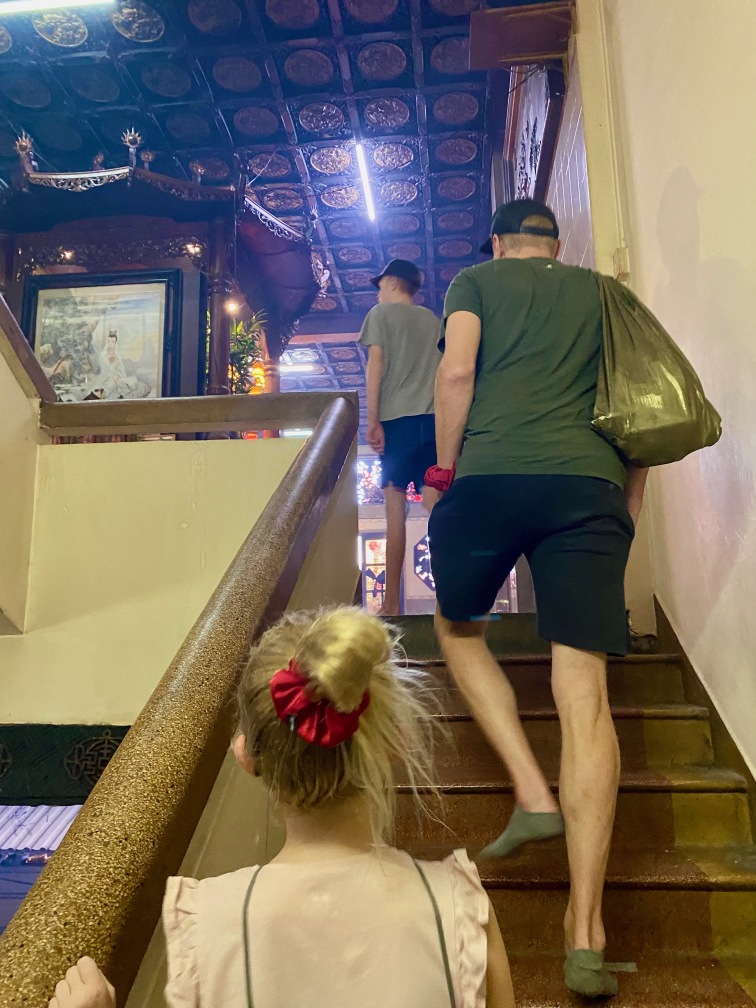
This narrow four-floor complex was busy with worhippers and visitors.
Vĩnh Nghiêm Pagoda
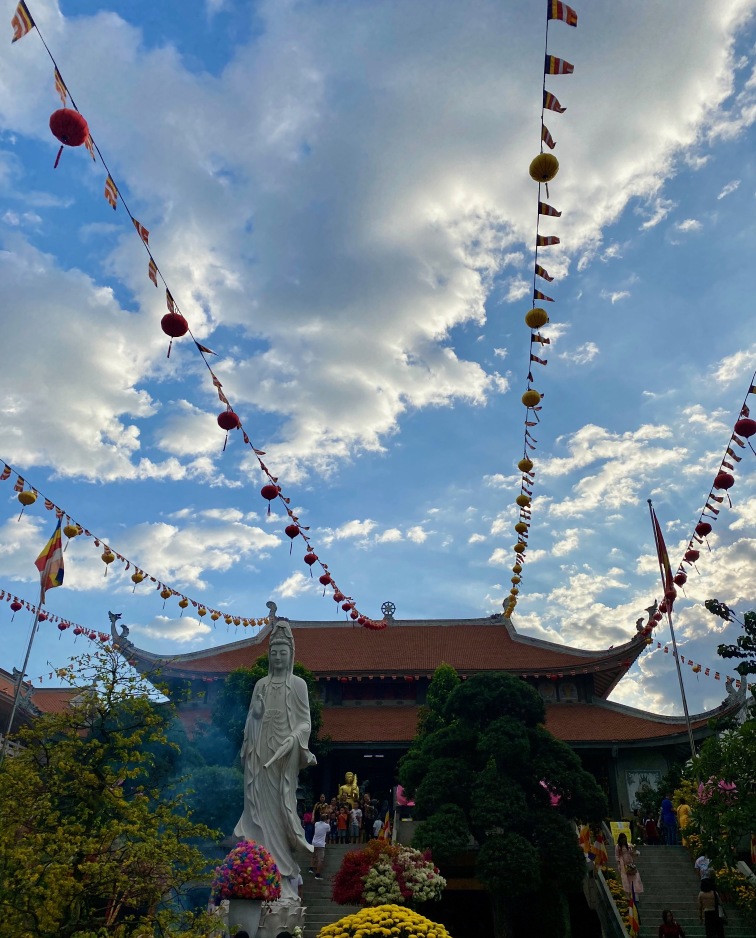
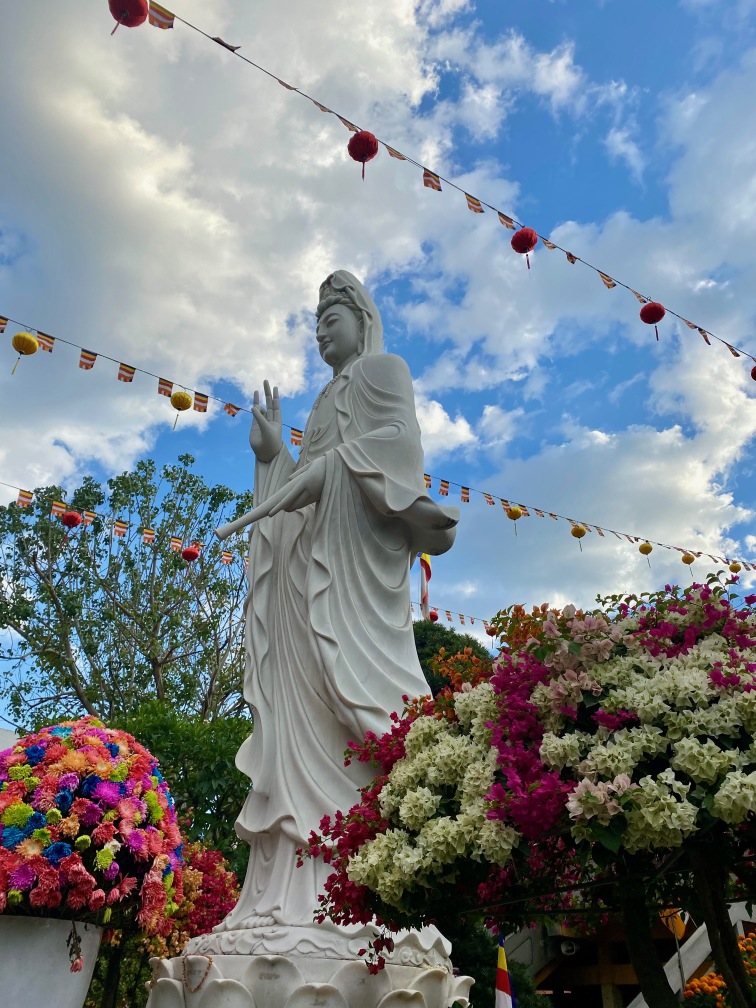
Located in District 3, Vĩnh Nghiêm Pagoda is a sprawling, busy Buddhist temple built in 1964.
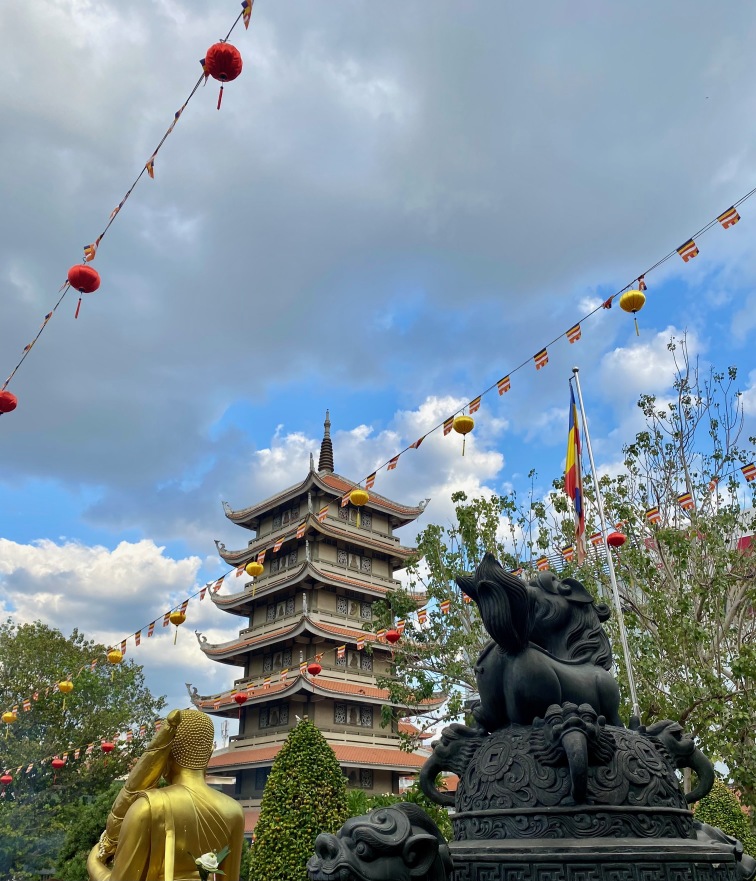
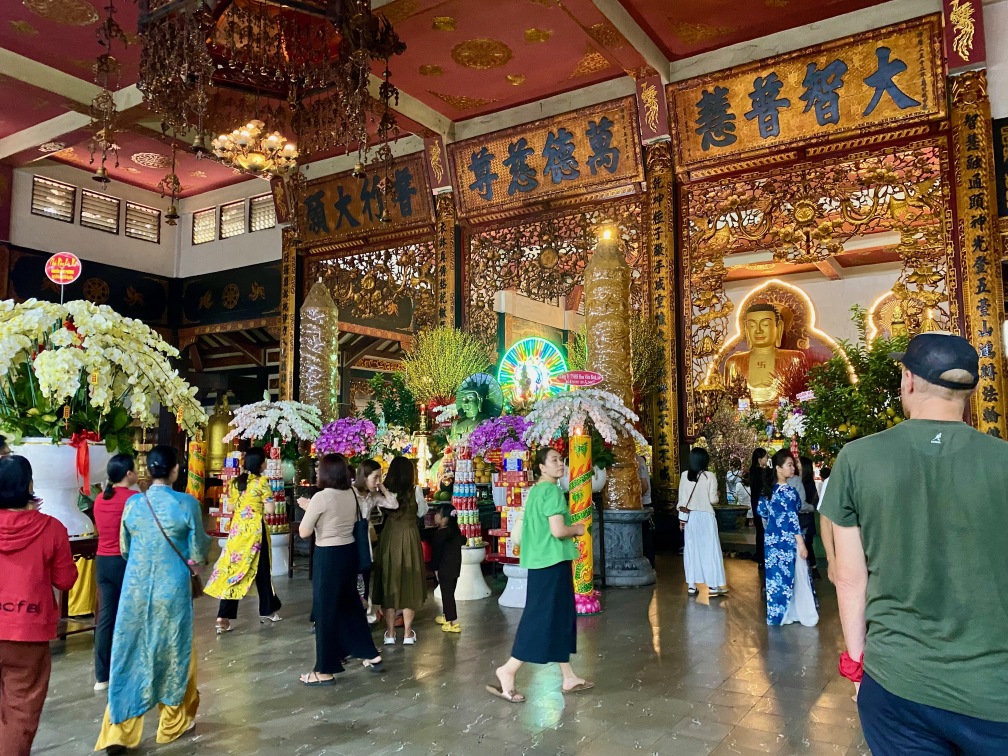
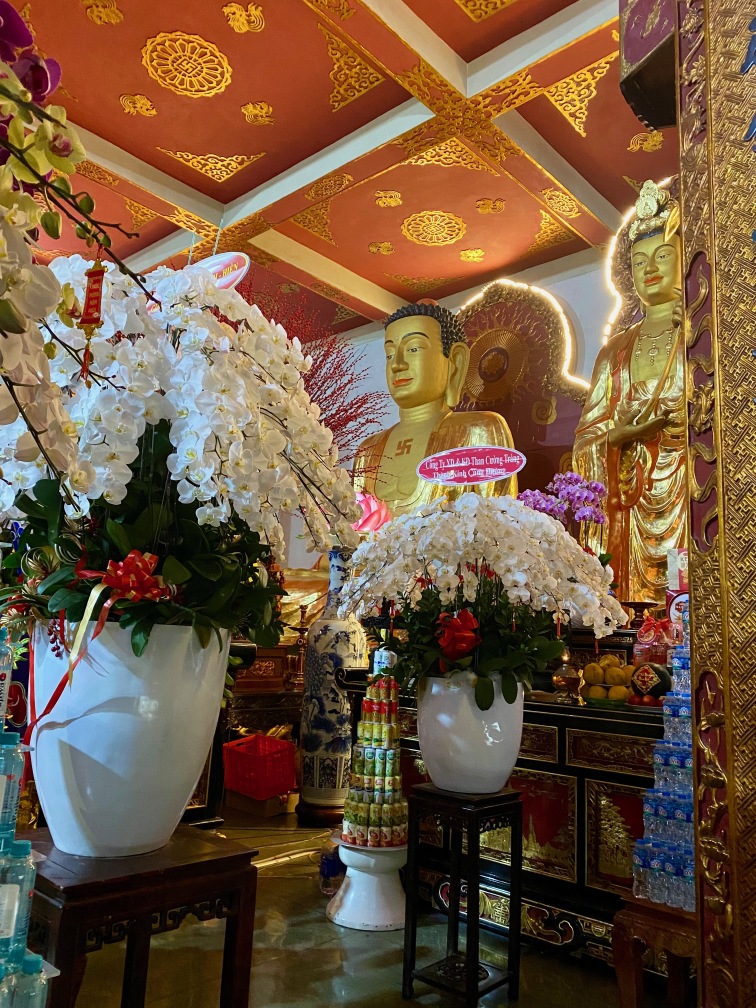
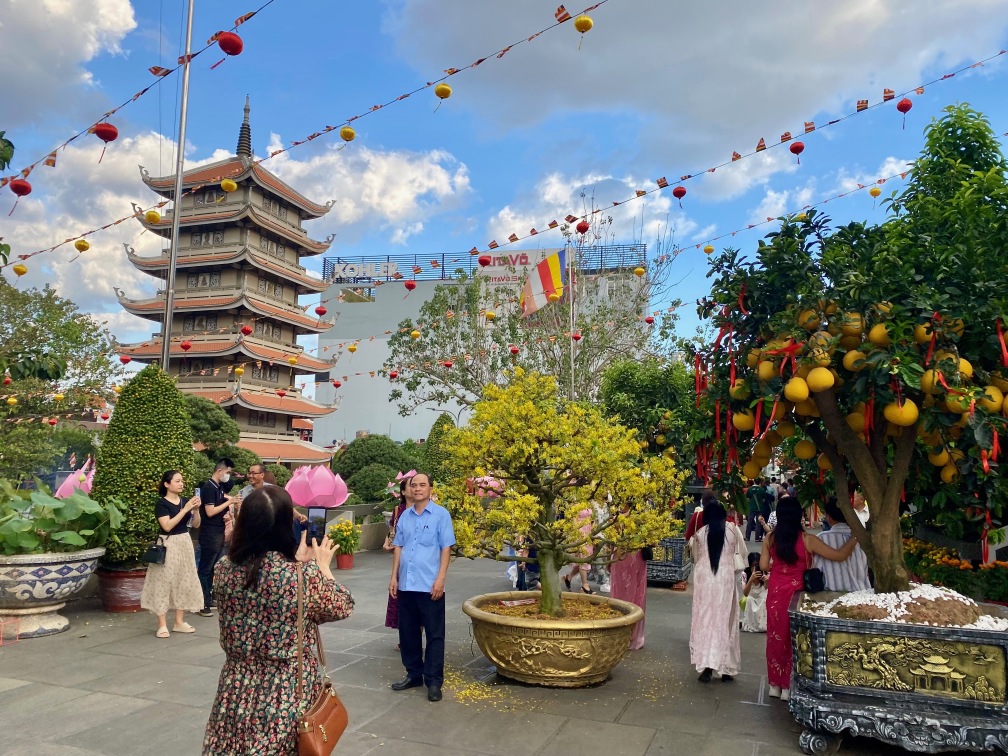
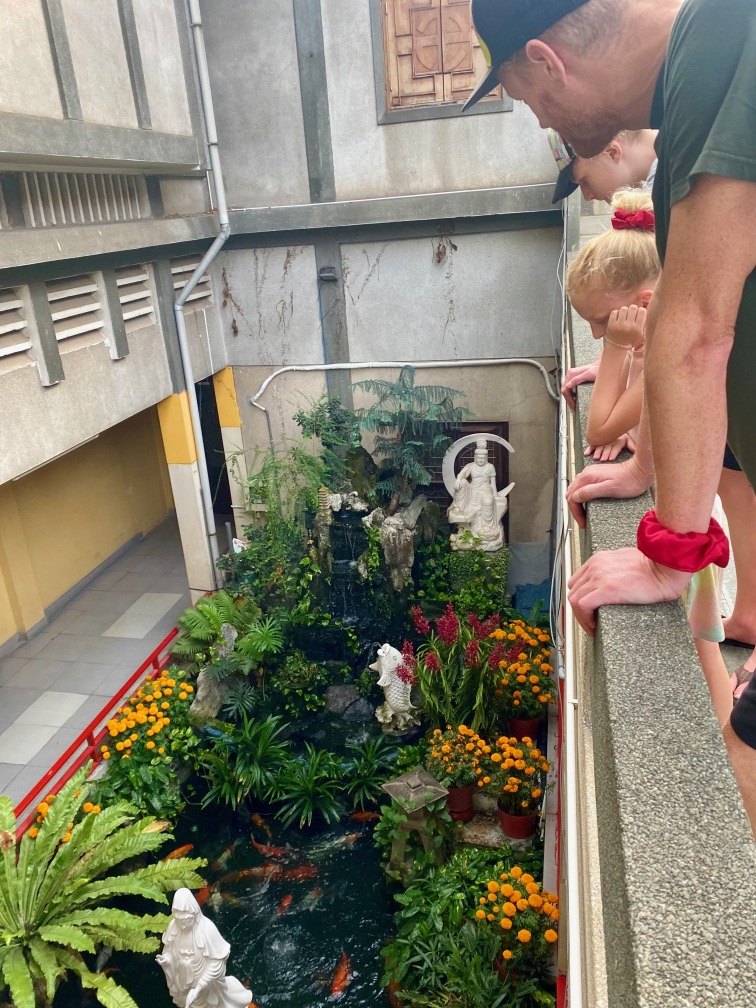
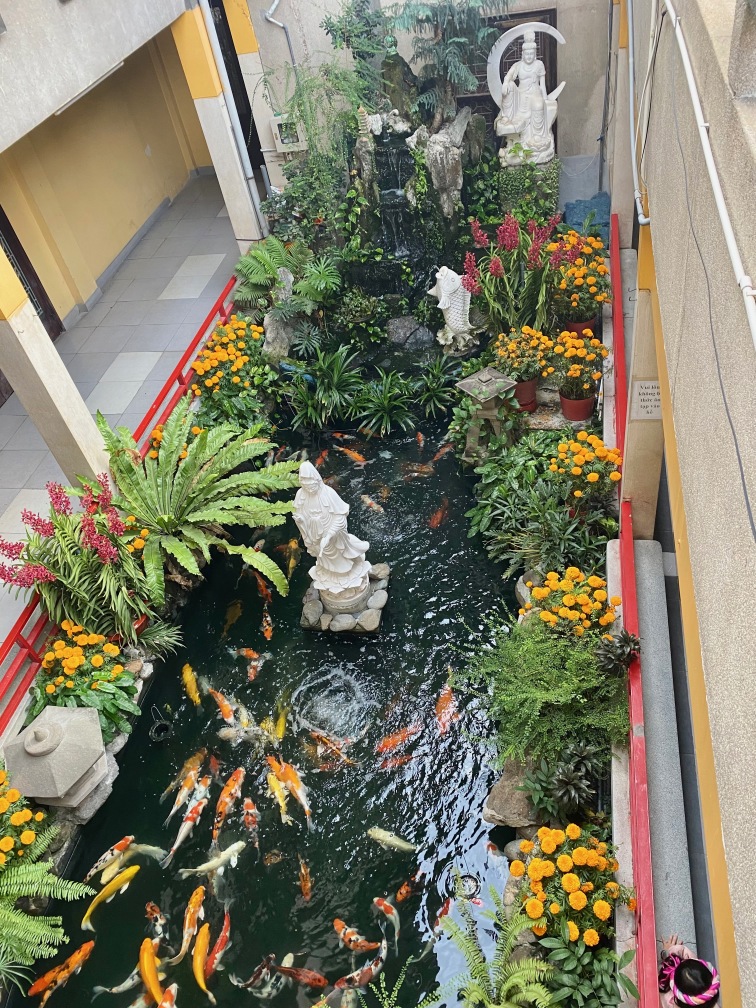
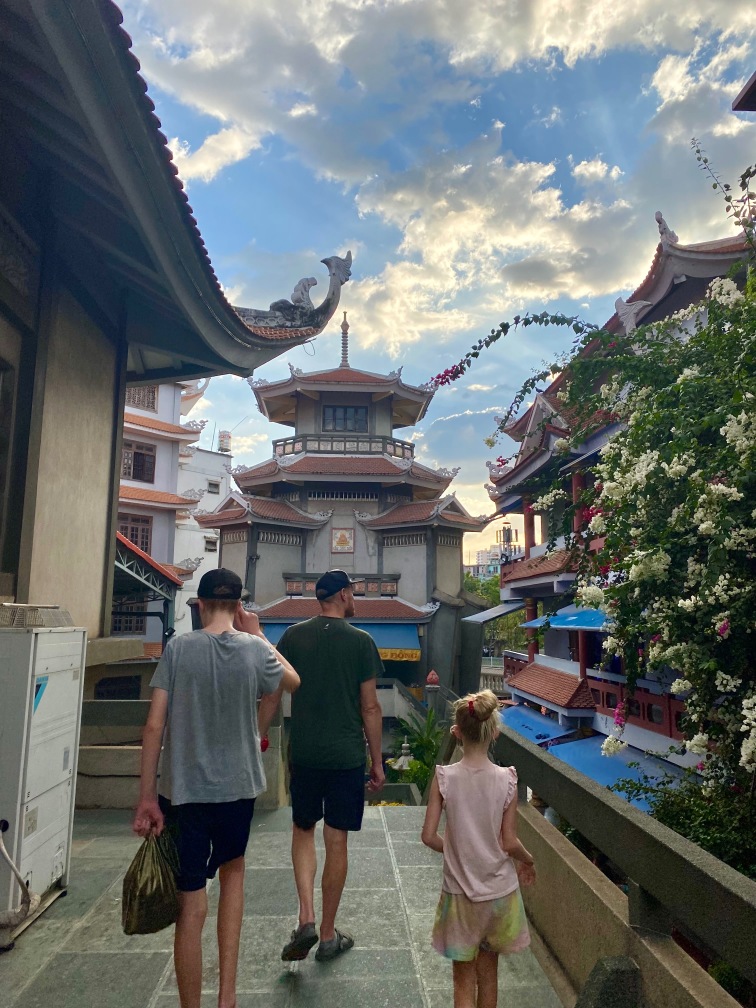
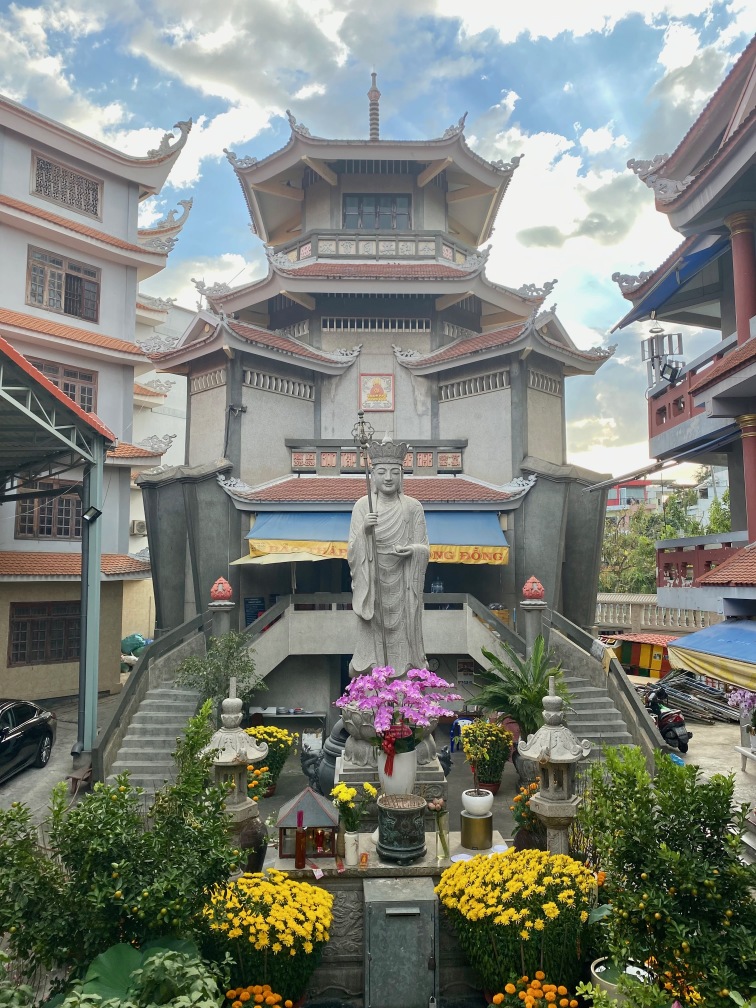
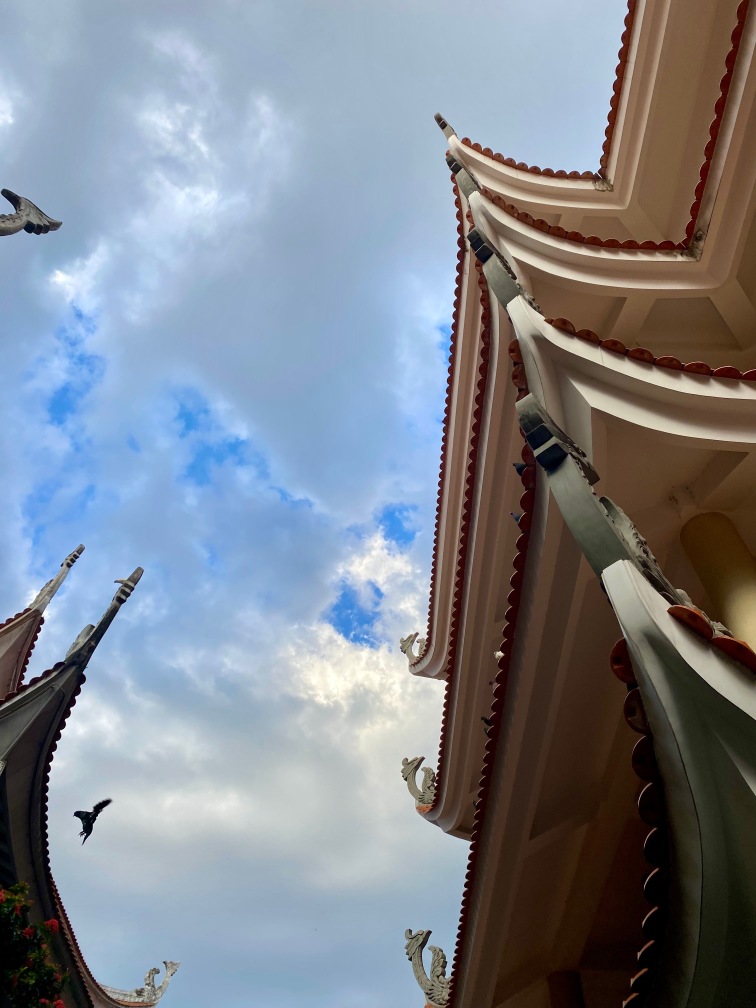
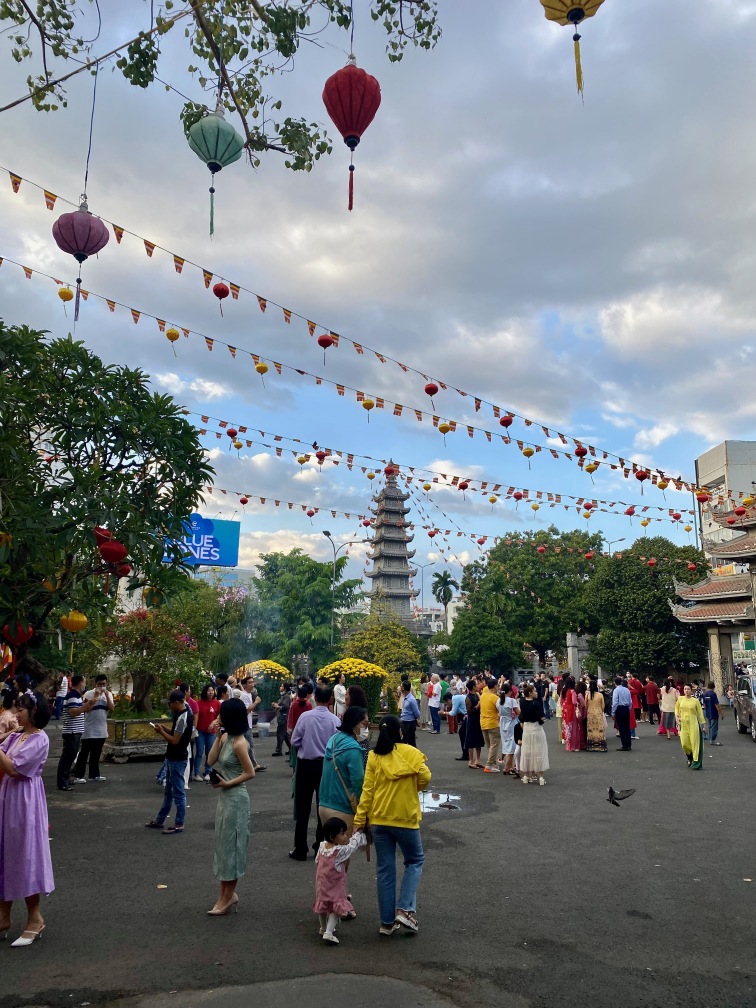
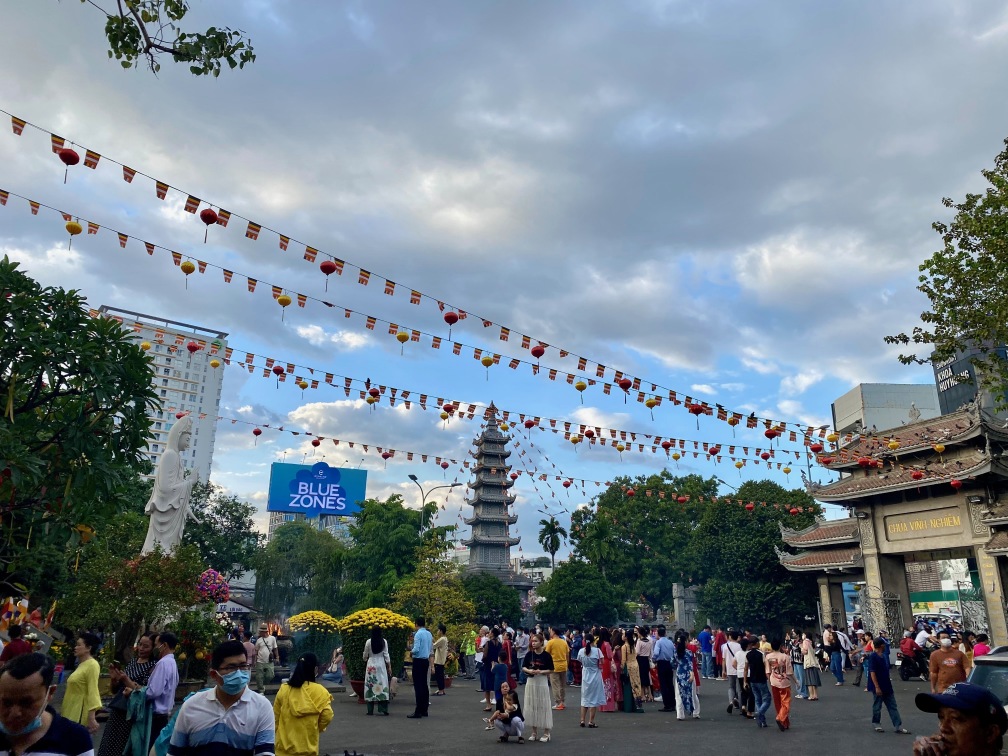
We had an epic day exploring three different temples in Saigon! Even though we didn’t always fully grasp the significance of each aspect, it was clear that these places were truly alive with community and played a key role in the lives of residents.
These places felt in some ways like community centers in addition to places of worship, and they were welcoming, calming, introspective places despite the crowds and the noisy city outside.